
An award-winning cannabis podcast for women, by women. Hear joyful stories and useful advice about cannabis for health, well-being, and fun—especially for needs specific to women like stress, sleep, and sex. We cover everything from: What’s the best weed for sex? Can I use CBD for menstrual cramps? What are the effects of the Harlequin strain or Gelato strain? And, why do we prefer to call it “cannabis” instead of “marijuana”? We also hear from you: your first time buying legal weed, and how ...
…
continue reading

Content provided by Recovery After Stroke. All podcast content including episodes, graphics, and podcast descriptions are uploaded and provided directly by Recovery After Stroke or their podcast platform partner. If you believe someone is using your copyrighted work without your permission, you can follow the process outlined here https://player.fm/legal.
Similar to Recovery After Stroke
If you are looking to increase your self love, confidence & self esteem then the The Confidence AND Self Esteem Podcast .com is for you. A mixture of stories, motivational talks and practical advice hosted by James Blundell. Become a supporter of this podcast: https://www.spreaker.com/podcast/confidence-self-esteem-podcast--3128218/support.
…
continue reading
Everyone has a dream. But sometimes there’s a gap between where we are and where we want to be. True, there are some people who can bridge that gap easily, on their own, but all of us need a little help at some point. A little boost. An accountability partner. A Snooze Squad. In each episode, the Snooze Squad will strategize an action plan for people to face their fears. Guests will transform their own perception of their potential and walk away a few inches closer to who they want to become ...
…
continue reading
Are you looking for more happiness, success and vitality in your life? Get inspired each week with wellness and performance expert, Integrative Medicine Fellow, author & keynote speaker, Kristel Bauer. Live Greatly shares empowering conversations and insights about happiness, wellness & success to support your personal and professional development. Kristel talks with top experts, leaders and inspiring individuals to help you embrace a growth mindset and excel in your work/life. Kristel then ...
…
continue reading
BackStory is a weekly public podcast hosted by U.S. historians Ed Ayers, Brian Balogh, Nathan Connolly and Joanne Freeman. We're based in Charlottesville, Va. at Virginia Humanities. There’s the history you had to learn, and the history you want to learn - that’s where BackStory comes in. Each week BackStory takes a topic that people are talking about and explores it through the lens of American history. Through stories, interviews, and conversations with our listeners, BackStory makes histo ...
…
continue reading
Named by Oprah as a thought leader for the next generation and one of Inc.'s 500 fastest growing companies, Marie Forleo's goal is to help you become the person you most want to be. In this show, Marie and her guests share actionable strategies for greater happiness, success, motivation, creativity, productivity, love, health, contribution and fulfillment — often with a lot of laughs. From business, marketing and career advice, to tackling failure, disappointment and fear, to philanthropy an ...
…
continue reading
The Washington Post's Presidential podcast explores how each former American president reached office, made decisions, handled crises and redefined the role of commander-in-chief. It was released leading up to up to Election Day 2016, starting with George Washington in week one and ending on week 44 with the president-elect. New special episodes in the countdown to the 2020 presidential election highlight other stories from U.S. presidential history that can help illuminate our current momen ...
…
continue reading
Best friends Joel and Matt are the co-hosts of How to Money which is all about providing the knowledge & tools that normal folks need to thrive in areas like debt payoff, DIY investing, and crucial money tricks that will provide continuous help along your journey. We believe that access to unbiased and jargon-free personal finance guidance is more necessary than ever before. When you handle your money in a purposeful, thoughtful way that works for your lifestyle, you can really start living ...
…
continue reading

1
Every Day Is Saturday Podcast For Motivation, Inspiration And Success
Self Improvement Coach Sam Crowley
 1k
1k 900
900


One of the top motivational podcasts for 18 years and running. Motivational messages to keep you inspired throughout the week. Success comes in all shapes and sizes. Sam Crowley’s authentic message will provide the inspiration you need to conquer the challenges and claim your power.
…
continue reading
Self Improvement Daily is the most consistent and value-packed podcast in the space. Every episode is specifically created to help busy, purpose-driven leaders acquire the ideas, structure, clarity, and perspective they need to maximize their potential and impact. Featuring a new 3-5 minute tip every weekday, biweekly expert interviews, never missing a day for the last 7.5 years, and having earned 21.4 million downloads to date - This is your path toward becoming the successful, impactful, a ...
…
continue reading

Player FM - Podcast App
Go offline with the Player FM app!
Go offline with the Player FM app!

))

Hemorrhagic Stroke Patients Recovery: Jonathan’s Remarkable Journey


Manage episode 523229731 series 2807478
Content provided by Recovery After Stroke. All podcast content including episodes, graphics, and podcast descriptions are uploaded and provided directly by Recovery After Stroke or their podcast platform partner. If you believe someone is using your copyrighted work without your permission, you can follow the process outlined here https://podcastplayer.com/legal.
Hemorrhagic Stroke Patients Recovery: Jonathan’s Journey Through Chaos and Renewal
When the clock struck midnight on January 1st, 2021, most people were celebrating a fresh start. Jonathan, at just 35 years old, was unknowingly entering the most challenging chapter of his life. His speech had begun to slur, his head pulsed with pain he couldn’t explain, and within hours he was rushed to the hospital during the height of COVID restrictions.
That moment was the dividing line between the life he once knew and the life he would rebuild from the ground up.
This is a story about what hemorrhagic stroke patients recovery really looks like, the kind that forces you to confront who you used to be and decide who you’re going to become next.
Before the Stroke — A Life Built on Momentum
Before everything changed, Jonathan was thriving. He worked in food science — a field he loved, filled with global imports, inspections, and ensuring food safety for the public. He enjoyed hiking, biking, dinners with friends, and a vibrant social life in the city.
He’d finally built independence, moved into his own space, and was exploring a new relationship.
His life had rhythm, structure, forward motion.
But as many survivors later recognize, stroke doesn’t appear at a convenient time. It arrives abruptly, often when everything seems stable. And for people seeking to understand hemorrhagic stroke patients recovery, this contrast before and after becomes a core part of the journey.
When the Body Sends Signals
In the days before the stroke, something felt off. Jonathan experienced intense migraines, stronger and stranger than anything he’d felt before. But like so many young survivors, he didn’t recognize them as warning signs.
Then, on New Year’s Eve, his speech began to fall apart. Words wouldn’t line up. Sounds emerged out of order.
His girlfriend noticed instantly: something was horribly wrong.
In minutes, Jonathan went from preparing to welcome the new year to being rushed through hospital doors under strict pandemic protocols. He had no idea this day would reshape him forever.
Early symptoms often become the first chapter of hemorrhagic stroke patients recovery, because they reveal how quickly life can break open.
The Diagnosis No One Expects at 35
Doctors discovered an AVM — an arteriovenous malformation on the left side of Jonathan’s brain. It had ruptured, causing a hemorrhagic stroke.
The bleed had stopped on its own and even drained naturally, something his neurologists called miraculous.
Still, the damage was significant:
- His speech was severely impaired
- His mobility weakened
- His memory disrupted
- His emotional world destabilised
He heard the words “hemorrhagic stroke” and “AVM rupture,” but they didn’t make sense at the time. Many survivors describe this moment as surreal, as if the diagnosis is happening to someone else.
“When your own words disappear, your whole identity feels like it’s gone with them.”
Recovery in Isolation — A Stroke During COVID
After only seven days in the hospital, Jonathan was sent home in a wheelchair. There were no open rehabilitation centres, no inpatient programs, and no in-person speech therapy available.
Therapists arrived at his family home wearing full PPE, “like a movie scene.” Everything felt unreal.
- Occupational therapy
- Physiotherapy
- Cognitive rehabilitation
- Speech therapy (virtual for an entire year)
- Social work support
- Nutrition guidance
All delivered at home, all while the world was shut down.
This is the reality for many navigating hemorrhagic stroke patients recovery during unpredictable times: healing becomes a collaboration between professionals, family, and faith.
Losing Everything — And Feeling All of It
The physical deficits were challenging, but the emotional costs cut deepest.
Jonathan lost:
- His job
- His independence
- His ability to drive
- His long-term relationship
- His financial stability
- His sense of identity
Anger, sadness, frustration, and confusion were constant companions. These emotional injuries rarely show up on scans, but they shape recovery just as strongly as the physical ones.
And like many survivors, he wondered:
Who am I now? Will I ever get myself back?
This is where recovery becomes something deeper than rehab. It becomes a reorientation of the self.
The Turning Point — Gratitude and Mindset Shift
One of the most powerful moments in Jonathan’s story came when he realized he could walk again. And speak again. And see his family. And simply breathe.
He realized:
I am still here.
I have another chance.
Gratitude is rarely the first emotion during a stroke recovery. But eventually, it becomes one of the most transformative.
Mindset is one of the greatest predictors of hemorrhagic stroke patients recovery, not because positivity fixes everything, but because a resilient mindset helps survivors keep trying even when the path is uncertain.
I’ve been there myself. When I experienced my strokes, I knew instantly that certain habits and patterns in my life had to change. Not because anyone told me to, but because something inside me shifted.
You begin to recognize what no longer serves you.
And you begin to aim your life differently.
Faith, Identity, and Rebuilding From the Inside Out
For Jonathan, faith became a compass. He studied scripture. He leaned into prayer. He found community in his church and mentorship in his pastor.
Whether someone practices religion or not, the principle is universal:
Recovery requires trust — in yourself, in the process, in the possibility of your future.
Faith, in its many forms, becomes a stabilizing force in chaos.
From Survivor to Guide — Serving Others Through His Pain
As Jonathan regained strength, he realized he wanted to give back.
He became a volunteer with:
- March of Dimes Canada
- Heart & Stroke Canada
He now supports survivors aged 20–80 in both English and Spanish, one of the most unique and powerful aspects of his journey.
The moment a survivor steps into service, their recovery deepens. Helping others expands meaning, connection, and purpose. I saw this in my own journey when I became a stroke advocate and launched this podcast.
Jonathan discovered a simple truth:
Helping others helps you heal too.
Visit:
 recoveryafterstroke.com/book
patreon.com/recoveryafterstroke
Building a New Life — Marriage, Mentorship, and Hope
In 2024, against all expectations, Jonathan got married. He started his own mentorship initiative for survivors, still volunteers across Canada, and continues to rebuild his life with clarity and gratitude.
His story is less about “getting back to normal” and more about discovering a new, purposeful version of himself.
What Jonathan Teaches Us About Hemorrhagic Stroke Patients Recovery
- Recovery is not linear.
- Identity gets rebuilt, not restored.
- You don’t need to do this alone.
- Emotional healing is just as real as physical healing.
- Gratitude can shift your entire experience.
- Community accelerates recovery.
Most importantly, your life didn’t end with your stroke — a new one began.
A Young Man’s Fight Back: Jonathan’s Hemorrhagic Stroke Story
A young survivor’s journey shows what hemorrhagic stroke patients recovery can look like — courage, faith, and rebuilding life step by step.
Instagram
Youtube
Facebook
TikTok
Website
Support The Recovery After Stroke Podcast on Patreon
Highlights:
00:00 Introduction to Jonathan’s Journey
01:31 Life Before the Stroke
05:41 The Day of the Stroke
14:02 Hemorrhagic Stroke Patients Recovery
23:05 Emotional Challenges Post-Stroke
31:38 Overcoming Bad Habits and Health Challenges
37:38 Finding Purpose Through Volunteering
45:31 The Role of Faith in Recovery
55:32 Understanding Suffering and Connection to God
01:01:01 Building Community and Fellowship
01:05:31 Future Goals and New Beginnings
Transcript:
Introduction to Jonathan’s Journey
Bill Gasiamis (00:00)
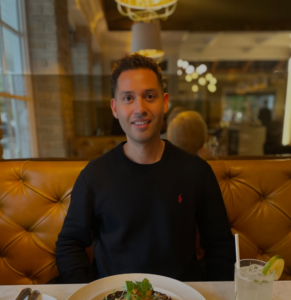
Today’s episode is one that really stayed with me long after we finished recording. You’re going to meet Jonathan, a young stroke survivor whose life changed in a moment he never expected. And what makes this conversation so powerful isn’t just what happened to him, but how he tried to make sense of it, rebuild from it, and eventually find direction again. I won’t give away the details. That’s Jonathan’s story to tell. But I will say this. If you’ve ever struggled with the fear, uncertainty, or emotional weight that comes after a stroke,
You may hear something in this journey that feels uncomfortably familiar and surprisingly reassuring. Now, before we get into it, I want to mention something quickly. Everything you hear, the interviews, the hosting, the editing, exists because listeners like you keep this going. When you visit patreon.com/recoveryafterstroke, you’re supporting my goal of recording a thousand episodes so no stroke survivor ever has to feel like they’re navigating this alone. And if you’re looking for something you can lean on,
throughout your recovery or while supporting someone you love, my book, The Unexpected Way That a Stroke Became the Best Thing That Happened is available at recoveryafterstroke.com/book. It’s the resource I wish I had had when I was trying to find my way. All right, let’s dive into my conversation with Jonathan now. Jonathan Arevalo, welcome to the podcast.
Jonathan Arevalo (01:23)
Yes, hi there Bill.
Bill Gasiamis (01:26)
Jonathan, tell me a little bit about what life was like before the stroke.
Life Before the Stroke
Jonathan Arevalo (01:31)
Well, life before stroke at 35 years old was good. It was really good. I had the opportunity to travel a lot and also I worked for a company related in foods. And it was something that I had a passion for since I studied that in university when it came to studying chemistry.
biology and also food sciences. And during that time is what led prior to my stroke, which was in January 1st, 2021.
Bill Gasiamis (02:14)
So you did, ⁓ you worked in food sciences. What kind of work did that involve? What does a food scientist do?
Jonathan Arevalo (02:24)
So for that type of job, worked as ⁓ specifically, it was QA coordinator, which I was in charge of all food products that come from all over the world into Canada, where I had to do audit checks, inspections, and make sure that every single fruits and vegetables had to meet the requirements, which are government requirements, and also meeting specifications.
for the safety, the safety before it goes out to the public.
Bill Gasiamis (02:57)
Wow. Was that a government job?
Jonathan Arevalo (03:00)
It was not a government job. It was more of a food company that is known all over North America.
Bill Gasiamis (03:11)
So just a very popular food importer for example that brings different products in and you’ve got to check them and inspect them So what do you do you opening boxes and looking literally at the food before? ⁓ gets the tick
Jonathan Arevalo (03:26)
Yes. So before anything gets accepted, ⁓ I receive C of As, which are certificate of analysis that come from different countries. And I need to go through all of those to make sure it meets government regulations and at the same time for the health and safety. So all of that, ⁓ I had to make sure both
reading it and as well physically inspecting myself. Yeah.
Bill Gasiamis (04:01)
I understood. What about home life? What was that like? How were you? Where were you living? Who were you living with?
Jonathan Arevalo (04:08)
Yes. So when it came to that, I was living in the city and I was living with ⁓ an ex-girlfriend who I was during that time. And what it was, it was a different change in life where I started to adjust a new relationship. And at the same time, I was adjusting in building my independence outside from home.
and starting like my own life differently. But everything went well until things started to change when it came to relationships and also work and also other things that came along with it over time.
Bill Gasiamis (04:58)
What did you do for downtime? Do you have some hobbies or are there some things that you enjoy doing after work or on the weekend?
Jonathan Arevalo (05:07)
Yes, yes. Usually, ⁓ would mostly hang out with friends, go out to meet up with friends to different places. We’d go out for dinner, out in the city. And also, I was very active, so we would go to different trails to do hiking. ⁓ Or also biking, like riding the bike and all that.
So different activities like that to stay active.
The Day of the Stroke
Bill Gasiamis (05:41)
Do you remember the day of the stroke? did you start noticing something going wrong? What happened on that particular day? What was different about that day?
Jonathan Arevalo (05:52)
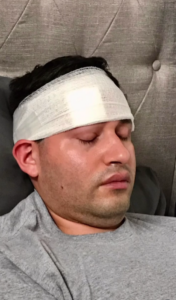
Yes, well leading to the stroke, was more during Christmas time. So in ⁓ this exact same time in December, where it was leading to my stroke that I started to get certain signs of, I wasn’t too sure what it was though, because I was getting some headaches and something very intense that I never had before, which are migraines.
And that was leading prior to the stroke and starting the new year. so then pretty much like on the 31st, leading to January the 1st, was the moment that I had my stroke. And then my ex-girlfriend who I was with during that time, which is already almost five years,
⁓ she noticed that my speech was, was, was going off. I had a lot of slurs in my words. I was getting like very intense headaches and it just didn’t seem normal. So she started to question and ask me questions that didn’t, didn’t make sense. So she automatically ended up calling emergency and I got rushed, ⁓ through emergency to, the hospital.
starting the new year.
Bill Gasiamis (07:22)
Well, so first of January 2021, was it?
Jonathan Arevalo (07:27)
Yes, January 1st, 2021. Correct.
Bill Gasiamis (07:30)
Wow, man. First day of the new year, straight into hospital.
Jonathan Arevalo (07:34)
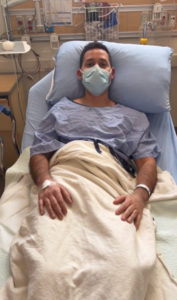
straight to the hospital, but not only straight to the hospital, but it was also during the time of COVID. And so that made it even more complicated because in the hospital, there was different cases going on at the same time. And whether it’s doctors, nurses, or different people entering and going out, ⁓ there was
Bill Gasiamis (07:42)
Uh-huh.
Jonathan Arevalo (08:04)
a lot of restrictions that was going on that certain people weren’t allowed to go in unless it was an emergency purposes. And also I had to wear a mask and all that because they weren’t sure whether I had COVID or it was something else.
Bill Gasiamis (08:26)
So do you, is this a story that you remember or somebody has told you about what happened that day? Because sometimes people hear the story from others, but they don’t remember going through it or what they were thinking or what they were feeling. What were you thinking or feeling during this whole thing with the strange migraine and then being taken to the hospital?
Jonathan Arevalo (08:49)
Yeah, for me, I slightly remember since I had ⁓ very, very like, like vague ⁓ scenarios that I was ⁓ that I still remember. But there’s other occasions that I don’t remember anymore. Like I lost a lot of that memory during that period of time because it happened so quickly that
that it was also a first time experiencing having a stroke. But I do remember like certain scenarios of being picked up from paramedics and then being rushed to the hospital. And then from there, not that much what happened afterwards, are certain things that I’ve forgotten or it’s hard to remember.
Bill Gasiamis (09:46)
Yeah, so you’re in the hospital. Do you understand when they tell you that we’ve discovered that you’ve had a hemorrhagic stroke? Like, are you aware of that? Or is it just noise? What’s it like to be told that you ever had a bleed on the brain?
Jonathan Arevalo (10:04)
Yeah, I find it that it’s very hard to understand that because I didn’t know what a stroke was in that time. And not only a stroke in general, but also the type of stroke that I had, which was a hemorrhagic stroke. But not only was it hemorrhagic stroke, it was as like the couple of days passed by,
I was also transferred to another hospital since the hospital where I was at, didn’t have the adequate ⁓ neurologist and specialist for stroke. So I believe it was on the third day or something like that. I was taken to another hospital where they do have specialists, neurologists and all that related to stroke. So they took my case because it was something very important.
And at the same time, they didn’t understand how I survived it as well because it wasn’t just a stroke on the left side of my brain. They found that it was an AVM. So it’s called anterior venous malformation, which could be caused from childbirth. As you get older, it could start to develop where you really don’t know because it’s internal.
So what triggered it was an aneurysm that made it rupture.
Bill Gasiamis (11:43)
We’ll be back to Jonathan’s story in just a moment. wanna pause for a second and ask you something important. Why do you listen to this podcast? For many people, it’s because they finally hear someone who understands what they’re going through or because they learn something that helps them feel less alone in their recovery. And here’s the part most listeners never think about. This show only stays alive because of people like you help it keep it going.
There’s no big company funding it, no medical organization covering the costs. It’s just me, a fellow survivor doing everything I can to make sure these episodes exist for the next person who wakes up after a stroke and has no idea what happens next. When you support the podcast, you’re making sure these conversations stay online. You’re helping cover hosting and production fees, and you’re making it possible for new survivors months or even years from now to find hope when they need it most.
Hemorrhagic Stroke Patients Recovery
Some people think my support won’t make a difference, but that’s a misunderstanding. Every single contribution is what keeps this podcast available for free to the people who need it most. And if you want to go even deeper on your recovery, you can also grab a copy of my book, The Unexpected Way That a Stroke Became the Best Thing That Happened at recoveryafterstroke.com/book. Yeah, I know all about arteriovenous malformations. That’s why I’m…
talking to you on this podcast because I had one of those in my head on the right side, near the cerebellum and it bled for the first time in November, in February 2012 was the first time my one bled. ⁓ But ⁓ I had numbness on my left side, the entire left side for a whole week before I went to the hospital. And then when they scanned my head, they said, we found a…
a shadow on your brain. The shadow on my brain is the white part on the brain scan on the MRI that reveals the bleed and the bleed. The bleed was caused by this blood vessel, faulty blood vessel that they called an AVM that burst and then created a lot of trouble, right? And then the whole journey begins and then it’s just, you know, starting out. So,
with mine, eventually they removed it from my head with brain surgery. How did they rectify the bleed in your brain? What did they do to stop it bleeding?
Jonathan Arevalo (14:15)
Well, it didn’t, it stopped on its own actually. ⁓
Bill Gasiamis (14:19)
Sometimes
they do that. I was told that sometimes they stop on their own and they don’t have to take any further action. But with mine, it bled another two times and they had to have brain surgery. But with yours, luckily, it stopped bleeding on its own.
Jonathan Arevalo (14:34)
Yes, Bill. So in reality, it was a miracle. It was a miracle behind it because it stopped the bleeding, but it also drained the bleeding that was inside. So it was like a drainage on its own. And that’s the miracle itself. And the doctors had a team of 10 in the hospital trying to monitor me.
and see exactly how did it happen and at a young age and someone that’s healthy and doesn’t have a history of being in the hospital or anything such as that. So that was the miracle itself. So the neurologist ended up ⁓ with their team. They ended up having, I had an angiogram.
And the angiogram was done through the side of the groin that goes up to your head, which they tried to ⁓ detect exactly the AVM. And that’s how they were able to find only one specific one that ruptured.
Bill Gasiamis (15:53)
Yeah, I had the same procedure through the groin and ⁓ they put the the contrast into the brain and then they take photos of that and it shows exactly where it’s bleeding. And that’s an interesting experience because you’re awake the whole time and they go past your heart and they go up into through your neck and then they go into your brain.
Jonathan Arevalo (16:11)
Yes.
Yes, it is. was like an experience that it’s hard to explain, but I felt like electricity in my body. And I don’t know why I felt electricity in my body, but I felt like shocks in my brain or like fireworks. And I was thinking, what’s happening?
Bill Gasiamis (16:19)
Pretty crazy.
Fireworks.
Jonathan Arevalo (16:47)
But the hardest part, Bill, was the fact that I had lot of difficulties in speaking. So words wouldn’t come out. For me, was like I tried to explain myself through, I don’t know how to say it, emotion.
So like facial, facial expression, kind of like when you feel in pain or something like that, or you’re trying to say things. So I had a lot of difficulty for that period of time. And also, since it happened on the left side of my brain, on the opposite side from arm to leg, I had ⁓ difficulty with my mobility. And also with my memory, my memory was affected.
⁓ about a percentage amount. it was very hard ⁓ my first year. It was very difficult.
Bill Gasiamis (17:59)
I
was 37 when I had mine and you were 35.
Jonathan Arevalo (18:04)
35.
Bill Gasiamis (18:07)
Yeah, very young, very young age and then a lot of challenges. So who was supporting you when you were at hospital? Was it your girlfriend at the time and other family members or nobody able to come because of the lockdowns?
Jonathan Arevalo (18:21)
Yes. So because of the lockdowns and all that, the only person that I had the permission ⁓ for that support was my sister, my older sister. So she ⁓ would be the only one that just by phone, so not in person, because ⁓ my family lived two hours away from the city. And since they live very far away, ⁓
⁓ My sister was the only one that had communication with the doctors, with the nurses and any specialist when it came to my case.
Bill Gasiamis (19:02)
Wow.
After surgery, after you woke up from hospital, the first seven days, you said the better week you’re in ⁓ that situation.
Jonathan Arevalo (19:17)
Yes, for a week. ⁓ so they ended up not doing anything. I’m not too sure why. And they let me go home.
Bill Gasiamis (19:29)
Wow, so they had drained the blood already out of your head and then just sent you home
Jonathan Arevalo (19:35)
They sent me home on a wheelchair. So what happened was that I ended up getting picked up by my sister and I didn’t go back to where I was currently living in the city. Instead, I went back to the countryside with my parents who ended up becoming my caregivers.
Bill Gasiamis (19:59)
So you had a, they sent you home in a wheelchair. Did that mean you couldn’t walk when you were sent home?
Jonathan Arevalo (20:08)
I could walk a bit, but not too well.
Bill Gasiamis (20:12)
So there was no rehabilitation option, you didn’t get rehabilitated, they didn’t give you occupational therapy or anything?
Jonathan Arevalo (20:19)
They did that at home as well. Because of COVID, I ended up receiving rehabilitation at home. ⁓ When it came to walking, speaking, understanding, cognitive, and social worker, and nutritionist, all of those types of therapists, ⁓ they had to dress up in a suit as if…
As if they’re going to see someone who’s with a virus or something. So it was like watching a movie.
Bill Gasiamis (20:55)
Wow
Yeah, pretty crazy times. So you did get rehabilitation. They did ⁓ support you with therapy for speech and all that kind of stuff. ⁓ How long did all of those therapies last? Was it?
Jonathan Arevalo (21:16)
Yes, that lasted for seven months.
Bill Gasiamis (21:20)
Wow man, all at home.
Jonathan Arevalo (21:23)
all at home, ⁓ in person, and also virtually the way we’re doing right now.
Bill Gasiamis (21:29)
Yeah, was it virtually for speech therapy?
Jonathan Arevalo (21:34)
Yes, virtually it lasted longer than seven months for speech therapy. It lasted a year.
Bill Gasiamis (21:40)
Wow, Yeah, that that’s kind of cool that even though they were going through a really difficult time in Canada, with lockdowns with all the stuff that ⁓ happened because of COVID that you still got access to all of the necessary tools to help you overcome what it was that you went home with.
Jonathan Arevalo (22:02)
Yes, yes, I’m very thankful. I’m very thankful that I received the support that I needed and also the support of my caregivers, my parents and my older sister, because mainly my older sister was the one that was on top of everything. So that way I may receive everything the moment that I got released from the hospital.
she ended up getting everything that I needed, so that way I get that support automatically right away, over the time, yeah.
Bill Gasiamis (22:40)
Wow, that’s excellent. So, however, now you’re living in different circumstances under lockdown, very difficult to access all these things, like things are seriously have gone wrong for you, know, quote unquote, in your health journey, okay? What is it like dealing with the emotional side of that?
Emotional Challenges Post-Stroke
Jonathan Arevalo (23:05)
Very difficult. I was very angry. I was very frustrated. I was very upset. I was confused. Those are the different emotions that I felt. And I believe that many other stroke survivors would feel the same way. Because I find it that whenever something has been taken away from you, then it hurts a lot.
And it hurts you a lot because it’s kind of like not being yourself anymore. So you have something that’s been taken away from you. And so I did lose quite a lot. I lost my job. I lost the ability to drive. So I had to sell my car. And I also ⁓ lost that relationship that I was in.
that relationship ended. And I also wasn’t earning any money as well. So the only caregivers were my parents. had to live with them again. And for the past four years of recovery, which I’m still in that recovery stage of stroke, but I’ve improved a lot though.
I’ve improved a lot and which I’m very, very thankful. And that just goes based on just having faith. And that’s where I started to change my life. I started to change my life the moment I started to change my mindset, the way I think. And because the moment I started to change the way I think, it was the moment that I was just much more grateful for even though I lost everything.
I was simply grateful to be alive. And that was much, much more meaningful than everything that I had.
Bill Gasiamis (25:08)
than being grateful for a car, for example.
Jonathan Arevalo (25:11)
Being much grateful for having the second opportunity to live when possibly I wouldn’t be here telling my story.
Bill Gasiamis (25:20)
Yeah, I totally get that. I went through a similar experience, know, gratitude. Even if you’re not able to come up with something that’s as meaningful as I’m grateful to be alive, like maybe you’re grateful because, I don’t know, there’s a roof over your head or, I don’t know, somebody said something nice to you or whatever. Like you can be grateful about many things, but-
being grateful to be alive. Well, that was an easy one for me as well. I totally get it. That’s what I went through. And I had another opportunity to make things right, to support ⁓ myself in a different way, to think in a different way, have it, to try different things and experience things that I’d never experienced before. What, what was the thing that kind of made you feel grateful to be alive? I know that
Do you know what I mean? There’s a layer beneath that. is, I’m alive, okay, but what does that mean that you’re grateful to be alive? I get it, but there’s more to that.
Jonathan Arevalo (26:33)
Yes, of course. Yes. I’m grateful for being alive because I have a second opportunity to change my life to something even better when it comes to helping others, when it comes to being a difference from our old self. Sometimes we don’t get a second opportunity to reflect, but I had…
four years, and it’s going to be almost five years, of the opportunity to reflect, of being thankful for, as you said, a place to live, for having my parents, for having my sister, and for having other loved ones that were there praying for me so that way I may live and not die. And at the same time,
⁓ Just being able to walk, to see, to speak, to understand. I was able to regain all of that that was lost. those were the reasons why I was grateful for.
Bill Gasiamis (27:48)
Yeah, your, ⁓ so your mindset and who you were and how you acted and how you behaved. Like, are you a very different person than the person beforehand? Like, what were the issues with your mindset? What were the issues with the way that you turned up in the world that you needed to tweak to be a better version of yourself back then? Now, I say that because many stroke survivors will say,
I want to go back to how things were before stroke. And I’m like, I didn’t want to do that. Like, that’s not a good place to go. You’re smiling. So I’m imagining that you think a similar way.
Jonathan Arevalo (28:30)
Yes, agree with you, Bill. I find it that sometimes we don’t change our old habits, let’s say. Sometimes we carry habits or cycles in our life that we think it’s good, but in reality, it’s not something good that actually ⁓ represents us.
or does good for others or even for ourselves. So myself, I can say that I had everything that I wanted and I had the opportunity to do pretty much everything that I wanted. But at the same time, I wasn’t completely happy. And at the same time, we carry certain bad habits because we think according to society, where society will
will accept you based on the things and the patterns that you follow society. When it comes to doing certain bad habits that you think that’s good, but in reality, it’s not really good because you’re actually hurting and damaging who? Yourself. Which is something internally, both mentally, physically, and emotionally. But over time,
When you start to reflect on your old habits that weren’t completely fulfilling or bringing that happiness or that peace or that joy, then in reality, it’s nothing good. It’s only for the moment. And sometimes we keep on rushing and doing things for the moment to get that pleasure. But that pleasure only lasts for a moment.
So I had to change. And this recovery over these almost five years was a recovery not to just change myself, but to change the way I think, the way I speak and the way I act, because it’s a full connection. And that full connection is the reason why now what I’m currently doing is helping other people, other stroke survivors and other people with disability and also mental health, because we find it that each day
The world is getting worse, not better, but worse. Why? Because we live in a broken world. And the fact that we live in a broken world is a reason why there’s many, many men and women that are looking for pleasure, but for the moment. And that’s something that I had to learn for myself the hard way. Even though I wasn’t in drugs, even though I wasn’t an alcoholic,
even though I wasn’t doing harm to people, but I would still have bad vices or certain things that still didn’t make me happy. So that’s the main reason why.
Overcoming Bad Habits and Health Challenges
Bill Gasiamis (31:38)
Yeah, it’s exactly my experience as well. Like I had some bad vices that were not ideal. They seemed minor, but the behavior, the habit behind it was not minor. It was major because it was there for many, many years. And if it continued to go on, wouldn’t be helping in a positive way. It wouldn’t be achieving a positive outcome. will be achieving something that my head
thought was a good idea at the time, but not really something that is meaningful, purposeful, useful in life. Smoking was one of those things I used to smoke. And people, often I had a friend of mine who would say that that thing will kill you if you keep doing it. And I was like, yeah, don’t worry about it. That’s a problem for Bill in the future. It’s not a problem for Bill today. However, Bill of the future had a bloody brain and…
a brain AVM bleed in his head. that became a 37. Really, that became a problem for Bill. Now. And I was smoking from about the age of 13, something like that, on and off. And my friend was telling me that from probably the age of 17, 18, 19, 20, 21. It didn’t take a lot of years to get to 37 and then be experiencing
you know, negative impact of a health situation. And I realized that I’ve got to make some massive changes. And obviously, to me at least, it was the most obvious thing that I have to give up smoking. Also alcohol, even though I wasn’t an alcoholic, I had to stop drinking alcohol. And now I very, very rarely drink alcohol. Even 13, 14 years past the first bleed, I very rarely have an alcoholic drink.
⁓ So it’s amazing what came to my mind. I immediately knew the things that I had to change. No one had to tell me, ⁓ well, since you’re ⁓ having a stroke, since you can’t walk properly yet, since your left arm doesn’t work correctly, why don’t you think about fixing this, changing that, doing this, doing that? No one had to tell me. Inside of me, instinctively, I knew
what I was doing that was not supporting me, was not supporting my mission in life and my goal in life. And it was the easiest thing to change. ⁓ I did receive some help though. I didn’t do it alone, right? So I had a counselor, I had a coach, a life coach. ⁓ I sought out the wisdom of people that were older than me, smarter than me, know, been on the planet longer than me whatever.
And I did it together with other people, not just on my own, because change is not very easy, especially when you remove an old habit and then you have to replace it with something. Initially, replacing it with something feels a bit strange and you don’t know if it’s the right thing that you’ve replaced it with and how that’s going to look like in six months or 12 months. So that’s what I found was that in order to help me find the right things to replace the things that needed to be left behind.
I needed to seek the support of other people, counselors, coaches, et cetera. Did you have some support in that part of your recovery so that you can kind of make sense of all the changes that were happening in your body, in your emotions and in your life?
Jonathan Arevalo (35:15)
Yes. So I ended up joining a nonprofit organization here in Canada called March of Dimes. And March of Dimes provides support for stroke survivors, people with disability, and they have peer support. And it’s a form of counseling with other stroke survivors.
And they do this within all of Canada. And also through Heart and Stroke as well, which is another nonprofit organization, Heart and Stroke. So both of them, would do this virtually where I would seek support to talk to someone based on what I’m going through, my thoughts, my emotions, and also telling my story.
And from that moment, I said to myself, I want to do the same. I want to give back to the community and to other survivors. So I ended up becoming a volunteer. And for the past three years, I’ve been a volunteer at ⁓ March of Dimes and also Heart and Stroke, where I ended up becoming an advocate.
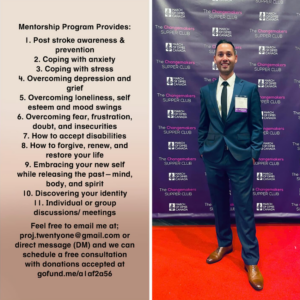
for both nonprofit organizations. And you can also see me on their website on both of them where it tells my story, but also the fact that I volunteer helping out people from the ages of 20 to the ages of 80 years old in two languages now. So I do it in English and Spanish. And it feels really, really good. It really does.
Bill Gasiamis (37:09)
Yeah, we have very similar stories and journeys. So I went and connected with the Stroke Foundation here in Australia and then provided became an advocate so that we can raise awareness about stroke and then started doing some speaking on their behalf at different organizations. And and like you said, like it gives you a lot of purpose and meaning. It makes what happened to you worthwhile.
You know, it’s a very important part of, well, why did this happen to me? I don’t know. You could come up with a lot of negative reasons why something bad happened to you, but what am I going to do about this? And how can I transform this in a way that can help other people? Well, that is a better question to ask. And then volunteering is the best way to do that. I volunteered probably from 2013 through to about 2019.
Finding Purpose Through Volunteering
For about six years I volunteered. And at the same time I was running the podcast, I started the podcast in 2015. ⁓ And it was just ⁓ meeting other people who had understood me as well in those communities. That was fantastic. Being able to connect with people like that and feeling like, you know, this person really understands what happened to me because it happened to them in a different way, but they have a similar kind of recovery. And…
we are aligned in our mission to support others and make a difference and not to make it just about us because that’s a really difficult thing to ⁓ do is you you become anxious and depressed when you just make it about yourself so making it about other people’s stops that thinking pattern ⁓ and I just love the journey that you’re on because you’re very early on in the journey and I can see it’s going to continue ⁓ to be that kind of
meaning making journey. I found that I said that I discovered my purpose after the stroke. Now you would have thought that somebody who was married had two children, had plenty of purpose in their life, plenty of meaning. Why do I exist for my children? To support them, to teach them, to make them great men, to ⁓ give them the opportunities in the world, in the community, except
They move out of home eventually, and then they become independent. And then your purpose and meaning has to shift. It cannot just be about them. You can include them in your purpose and meaning because you love them, they’re your children, et cetera, in my case. But, you know, they don’t need me now to be the guy that shows them the way of the world and…
educate them and prepare them and all that kind of stuff. They are doing it on their own. When they do need me, they come for five minutes or 10 minutes. We have a conversation and they’re done. So it’s important to shift that energy that I had as a parent to other people who need support in the early days of their experience when they have a negative health experience so that we can help guide them through
that adversity and overcome and then maybe grow and be a better version of themselves in a few years down the track.
Jonathan Arevalo (40:41)
Yes, I think that it’s important to be a good example, a good leader, whether it’s at home or everywhere we go. We always need to be a good testimony. And the way I’ve learned that is also through my dad, which he taught me at a young age to be
to be a man of righteousness, where he shows a good example through his good actions, but not only through words, but through actions, right? Because sometimes we may speak and say a lot of things, but we don’t live it. But when you live it, it makes a huge difference. And whenever we show those examples, whether it’s…
to anyone, any family members, strangers, or anything like that. We need to be like that everywhere we go. And that’s something that I’ve learned a lot, that we need to be a good example to anyone.
Bill Gasiamis (41:47)
Yeah, I imagine that in the last five years you would have had some setbacks as well. What was the hardest challenge to overcome, do you think, for you? Was it physically or was it emotionally?
Jonathan Arevalo (41:59)
⁓ I think it was more emotionally than physically. But it’s something that I was able to work on because even myself, ended up seeking support. And not only through these nonprofit organizations, but also within the church. So I ended up going to church and
I had one of the pastors being my mentor ⁓ for a year and a half, and he ended up helping me out a lot. And it was a big amount of support that I received also from my dad and my mom and my sister. So I always had ⁓ a close family support. Yeah.
Bill Gasiamis (42:54)
Yeah, the church is very common in people’s recovery. You hear a lot about people reconnecting with their church or even if they were still connected with their church, getting supported and having people turn up, ⁓ provide food, provide counseling, provide encouragement, all sorts of things. ⁓ And it sounds like it’s a fantastic community. And then you also hear from people who had ⁓ non-church type of.
communities who come forward, support them and give them ⁓ the things that they need to kind of get them settled and in some kind of routine where they can continue recovery in their own way. ⁓ But there would have also been hard times, right? Where, because most people, and on my podcast, we talk about all the amazing things that stroke survivors do and they overcome, et cetera, but there’s also a…
really, really hard times. I went through what I would call rock bottom moments, found myself in the abyss. Did you find yourself there at all? Had you experienced kind of that really down negative part of stroke ⁓ in your mental state and your emotional state as well?
Jonathan Arevalo (44:09)
Yes, ⁓ within the first year. So the first year was everything like I mentioned earlier about feeling angry, frustrated, ⁓ sad and all that. The first year was the hardest part of ⁓ just not knowing what to do. And the only support was ⁓ through my parents that
helped me a lot to kind of take away those negative thoughts. And also getting into the church where I had support with the pastor. And then myself just changing my mindset where I had to start looking more into, more to God because I find it that without God we’re nothing.
And based on my faith, that’s what gave me the strength, the encouragement, and the joy that was taken away the moment I had my stroke. So my faith in God was what gave me the strength and gave me the encouragement to move on forward.
The Role of Faith in Recovery
Bill Gasiamis (45:31)
Let’s talk about faith for a moment because people may not believe in God. Some people may not believe in God, a God, their God, whatever. faith on its own as a experience is something that we, if we practice, ⁓ is really supportive of recovery. So faith in ourselves, faith in the medical system, faith in any situation where
We have to put our kind of our life in the hands of other people. That’s what we’re practicing for people who don’t have faith in God or who don’t have a God or don’t believe in God. You still have to practice faith and you practice faith every single day. ⁓ I wanna go and receive one of my medications. You have to have faith in the medication that is going to work for you and it’s going to actually do the job.
that it’s meant to do. Keep your blood pressure down, for example. I’m on blood pressure medication. ⁓ When I drive my car, I have to have faith that the other person is gonna stay on their side of the road and they’re not gonna come on my side of the road. And you know, 99.999 times out of 100, that’s exactly what happens. know, ⁓ when I have, when I’m driving the car, once again, I have to have faith that the lights that I stop at are going to, in fact,
when it’s red on my side, it’s going to be green on the other side. And at some point it’s going to switch and it’s going to go green on my side and it will definitely go red on the other side so that we don’t collide. You know, there’s faith. We practice faith all the time throughout our day, throughout our whole life without even really knowing it and without needing to practice faith in a religious way. ⁓ And that’s what I’ve kind of got out of my whole, my whole journey is
I didn’t find God so much in that I see God differently these days. I kind of believe that God is me. I am God, God is within me. So when I request a solution, if I use the word God in the sentence, God guide me to find the answer to this difficult question, what I’m actually doing is I’m having an internal conversation with myself.
And I’m asking myself, my unconscious self to guide me to find the answer in this particular way. And that way I can combine God, the non-religious version of God, we’ll call it spirit or our creator or whatever you want to call it. And I can embody that and then make it part of me. And then in the right context, I can access
the wisdom of God, the creator, nature, whoever, and I can be guided instinctively to follow my gut to an answer. And then if I go down a particular path that was not that way, and I find the wrong path, I can redirect, go back in, redirect and go again. So I became
I suppose more, maybe the word is spiritual, it’s probably not the right word, but it’s how I kind of practice my, what you might call connection to God and faith. That’s how I practice it. How does that sound to you?
Jonathan Arevalo (49:08)
Yes, for me, it’s having faith is believing without seeing. And whenever you build a relationship with God is the moment that you start to learn who God is. And when you read God’s Word, God’s Word teaches us about His promises. His promises that He has for each one of His children, which God created, heaven and earth and everything that we see. And the fact that we breathe and
and all that, that’s God who does that. there was this, the other day I was reading and it’s ⁓ in the Bible in the book of Isaiah, who’s a prophet. And it was based on the story of a king and the king is his name is Hezekiah. And Hezekiah had an illness, but not only that, it said, actually, can I read it in?
in a second. So it says in his book that
It says in Isaiah 38, it says, In those days, Hezekiah became ill and was at the point of death. The prophet Isaiah, son of Amoz, went to him and said, What is what the Lord says? Put your house in order, because you are going to die. You will not recover. Hezekiah turned his face to the wall and prayed to the Lord.
Remember, Lord, how I have walked before you faithfully and with wholehearted devotion and have done what is good in your eyes. And Hezekiah wept bitterly. Then the word of the Lord came to Isaiah. Go and tell Hezekiah, this is what the Lord, the God of your father, David, says. I have heard your prayer and seen your tears.
I will add 15 years to your life and I will deliver you and this city from the hand of the king of Azariah. I will defend this city. This is the Lord’s sign to you that the Lord will do what he has promised.” So when I read that, I said, wow, how amazing God is that not only does he give promises to either
kings and all of that during 2000 years ago in history and how God is still faithful to each one of us. Why? Because each one of us have a purpose and because God has created us with purpose is the reason why his love and mercy is so great. And that’s why I’m thankful for it I know that God is faithful and because his faithfulness
He’s given me a second opportunity to live.
Bill Gasiamis (52:16)
Yeah. So you you take your Bible everywhere now.
Jonathan Arevalo (52:21)
I take his word everywhere in my heart and I find it that his word is real and is truthful because without God’s word, there’s no life.
Bill Gasiamis (52:28)
Yeah.
So what about before stroke? Were you somebody that knew the scripture? Were you somebody that ⁓ had that type of connection to the word?
Jonathan Arevalo (52:47)
I didn’t have that connection as much as I have it now.
Bill Gasiamis (52:51)
Yeah. That’s cool.
Jonathan Arevalo (52:53)
And that goes based on like we spoke earlier about having a relationship. It’s not really following a religion. It’s knowing that there’s something greater than us. That’s the difference.
Bill Gasiamis (53:05)
Yeah.
I agree with that.
Jonathan Arevalo (53:09)
And when we know that there’s something greater than us, then we can see that things change. But only things change only if we change ourselves in the inside. Because remember, this world that we live in, as I said earlier, we live in a broken world, right? A broken world where we find a lot of chaos and a lot of things going on. But without that love, without that peace, without that joy, that can only come.
through the creator, which is God. And that’s the only way that you can actually be molded to the righteous man of who God has created in us. But we just need to know how to find that. And that way is through His word. His word teaches us that. And the moment that we apply that to our lives, day by day, the same way like with our health, our sickness, our weakness, our insecurities,
How can we change that? We can only change it the moment that we apply it into our lives, little by little. And through that is the moment that we can see transformation and a step of moving forward and also breakthrough. Breakthrough is only done through changing our old selves. Because our old self is very hard to break, because we still carry that.
Understanding Suffering and Connection to God
Bill Gasiamis (54:35)
Yeah, I agree with a lot of what you’re saying. Some people will be listening and going, well, if God is so good, why did God do this to me? You know, some people are far more injured because of stroke than you or I, even though your injuries and mine are all valid. There’s people who won’t walk again. There’s people who lose their memory, who can’t remember anymore. There’s people who cannot get their speech back. There’s people who’s…
left arm, right leg won’t work again, then there’s people who will pass away. And then some of those people find that they’ve been harshly treated by God, by their maker, their creator. How do you talk to people like that to make them feel like it’s not personal? God, your creator, your maker has not gone after you and ⁓ is not punishing you.
Like what do you say to people who lose connection with spirit, with God, with their creator?
Jonathan Arevalo (55:40)
Yeah, well, what I can say is that that God is so merciful, right? And because God is so merciful and through His love, we see in God’s Word that He died for us in the cross for our sins and is due to sin that we go through all these challenges. And that’s the connection through a broken world that we live in.
is because everything comes from sin. And sometimes it’s hard to say, why is this happening to me? Or why am I not getting better? Well, everything goes back to sin. And because until we kind of, until we accept Jesus Christ, but not only accept Jesus Christ, but at the same time, God allows certain things
that we have to go through. We have to go through certain challenges or obstacles, right? But it’s really hard to say. I find it. Maybe to answer that question.
Bill Gasiamis (56:47)
Yeah.
I actually don’t mind the word sin when you use the word sin, because I’ve recently discovered ⁓ some people’s meaning of the word sin is to take that an incorrect aim to aim in the wrong direction. And I really relate to that. So when I sin, I don’t kind of see it as a, ⁓ you good, me bad. Like, do you know, don’t, I don’t sort of see that type of thing. It’s just aiming in the wrong direction. For example, previously my life was
led by my head. It was my head that was telling me this sounds like a good idea. Yeah, we should have three cars. We should have the biggest house possible. We should do all of that. My head was guiding my life, whereas now my head is supporting my heart to guide my life. That’s why the podcast exists, because the podcast is not about what my head thinks is a good idea. Because if my head thought it was a good idea, this podcast should be making
a shitload of money and it’s not making a ton of money. That’s why I request support from Patreon. That’s why I wrote a book to make a little bit of money so that I can ⁓ cover the costs of recording, editing, uploading, hosting a podcast. Like that’s the reason why it needs to make money, but it doesn’t need to make hundreds of thousands or millions and millions of dollars. My head in the old days would be going, dude.
Don’t ever do 400 episodes of stroke survivors podcast. I’m not interested in that. And I, and I would be going, okay, what do I need to do? And my head would be going, you need to 24 hours a day, seven days a week and make as much money as you can. So you can have all the things that we’re told by the marketing companies that you need to have. I see that as a sin. Do you understand? That is the wrong aim. I’ve taken aim.
dude and I’m putting all my energy into the wrong things. Whereas now I’ve taken aim and adjusted and now I think I’m aiming in the right direction. It’s about purpose, meaning, connecting with other people, helping other people, supporting other people. I’m no longer sinning in that particular way. That’s the literal description of the word sin. So it’s really important that
I learned that because if I didn’t learn that I would be taking when I hear the word sin as a me bad, everyone else good. And that’s definitely not what it is. And that’s what I think the, the bleeding in my brain helped me adjust the aim, redirect where I was heading in my life, who was important, why they were important to me. ⁓ and, and my community is not a church.
but I’m creating my own community on this podcast, know, 400 interviews, people who reach out from you all around the world. It’s the same kind of community, giving community as a church community is. We support each other, we help each other, we give people information, we connect other people with ⁓ doctors and conditions and solutions. So it’s like, yeah, that’s what I was lacking. I was lacking community.
Jonathan Arevalo (1:00:01)
community.
Bill Gasiamis (1:00:02)
I was lacking people who understood me and who were similarly aligned to me. You know, I was connecting with people who were sinning in their own way because their direction was all wrong and we were finding each other and we were making life harder for ourselves by being all in our heads and not connected to our body and our heart, right?
Jonathan Arevalo (1:00:23)
Yeah, that’s right.
Bill Gasiamis (1:00:25)
That’s kind of my religious journey without connecting it to a religion or to a religious chapter or to a church in a particular location. But I still feel like it’s a religious journey, you know?
Jonathan Arevalo (1:00:39)
Yes, like the moment that you build fellowship as we’re doing right now, we’re sharing our stories and we’re sharing our journey as stroke survivors. And through this story is what shows
which is what shows purpose and also can leave an impact to others, survivors. Because if we don’t show a difference and if we don’t help support other people, then what purpose do we have on this earth? Right? We’re here to help one another and to be different in a good way.
Building Community and Fellowship
Because every single time we’re always going to be going through different challenges. Whether it’s negative thoughts or everything that we see on TV. Because every single time that we’re looking at the news is always bad news, So all those negative thoughts are something that we are affected day by day. And the only way that we’re able to overcome those negative thoughts is by
putting ourselves surrounded in other things. Other things that can help us strengthen our mind, our body, and emotions. But that’s something that takes day by day.
Bill Gasiamis (1:02:14)
Yeah, I love it. I love your journey. I love how similar we are in our path, even though we talk about it in a slightly different way. ⁓ Leading a good example is something that was very important to me. I want to be a good example for my kids. In my book, ⁓ the dedication says to all the stroke survivors who are dealing with the aftermath of stroke.
and despite it all are seeking transformation and growth. And that’s the first part of the dedication. And the second part of the dedication says to my family, I hope that that I have set a good example. I mean, my only goal, my only goal is to set a good example, to show them when adversity comes, how you can respond. There’s a
Jonathan Arevalo (1:02:59)
Thank
Bill Gasiamis (1:03:10)
I think there’s a way to respond that’s wrong. And then there’s many ways to respond that are right. There’s a one, there’s unfortunately, you know, responding by going back to the way that you were before, think is the wrong way to respond. then finding a new path forward, taking aim and choosing the wrong direction, sinning, and then readjusting, and then going again in another direction, I believe.
like is the example that we need to set for other people just so that my kids can see in the future when they go through a tough time, they go, I think I remember one way that my dad did it that might be supportive of my recovery down the path and see, okay, this is what dad did. I don’t need to do what dad did, but this is kind of how he thought about that and how he approached that. That’s really.
what I was sitting out to achieve. And I think I’ve achieved that and I feel really good about that, you know.
Jonathan Arevalo (1:04:17)
Yeah, no, I think that’s excellent, Bill. I’m glad that you were able to create a podcast. And ⁓ thank you for this opportunity because I never thought I’d be able to share my story. And as well for the fact that your sharing was called, ⁓ that you created a book to tell about your stroke survival. And I think that that’s going to impact many, many, many other survivors.
They’re going through difficult times and I think that’s amazing.
Bill Gasiamis (1:04:52)
Yeah, thank you. A lot of people have bought it. I think there’s at least 600 copies being sold at this stage. And that’s not a lot. It’s not a million copies, but ⁓ it was never about the number. It was just about having it available just so that people can come across it if they need to and ⁓ read it and just see a different perspective of how you can approach your recovery. ⁓ You can get the book at recoveryafterstroke.com/book for anyone that’s watching and listening.
So as we kind of get to the end of this interview, tell me what’s next for you. What’s on the to-do list? What goals do you have that you want to achieve?
Future Goals and New Beginnings
Jonathan Arevalo (1:05:31)
Yes, well, what I’ve been able to achieve ⁓ was that I ended up getting married this year. Thank you. It wasn’t something expected because I thought maybe it’s not going to be possible to meet someone based on my condition and everything, but…
Everything changed. And so I got married on April 11th of this year. So I’m now married. And the other thing that I started this year was besides the volunteering, I also created ⁓ my own like small business when it comes to mentorship to help other people, which are people that are either stroke survivors.
People with disability and also mental health. And I created my website on that to help a lot of people. And it’s ⁓ non-profit at the moment, which is donation-based. And I’m still helping in the community. I still volunteer. And I still ⁓ help out in the church and many other places.
So those are the things that I’m still currently doing.
Bill Gasiamis (1:07:02)
Fantastic, man. So the website, we will have the links to all of the different social media and your website, et cetera, for people to follow if they want to connect with you. ⁓ The journey that you’re on, you’re calling it the 20, the project 21.
Jonathan Arevalo (1:07:28)
Yes. The reason I called it Project 21, because this journey that I’m going through is like a form of a project. And everything started in 2021. So that’s why I decided to pick something unique and different and call it Project 21.
Bill Gasiamis (1:07:51)
Yeah, fantastic, Jonathan. I really appreciate our conversation. Thank you for reaching out and joining me on the podcast. I love the work that you’re doing and will continue to do. There’s many, many years ahead of you of doing fantastic work and I look forward to keeping in touch and finding out how your journey unfolds.
Jonathan Arevalo (1:08:14)
Yes, thank you, Bill. I appreciate it.
Bill Gasiamis (1:08:17)
Well, thanks so much for listening to this episode of the Recovery After Stroke podcast. And thank you to Jonathan for sharing a story that takes a lot of courage to revisit. One thing I hope you take from this conversation is that recovery is never just physical. It’s emotional, it’s messy, it’s confusing, but it is also an opportunity to rediscover who you can become. Jonathan’s journey shows that healing doesn’t always look like we expect. And sometimes the smaller steps forward end up becoming the most
meaningful ones. If this episode helped you feel understood or gave you something to think about on your recovery path, remember to visit patreon.com/recoveryafterstroke. Some people believe their support won’t make a difference, but that’s an assumption that simply isn’t true. Every contribution helps me continue producing these episodes, keep them online and moving toward my goal of recording a thousand conversations. So no stroke survivor ever has to feel like they’re going through this alone.
And if you haven’t already, you can also order my book, The Unexpected Way That a Stroke Became the Best Thing That Happened at recoveryafterstroke.com/book. Many listeners expect it to be just my personal story, but it’s actually something much more useful. It’s the guide I wish existed when I was confused, overwhelmed, and trying to figure out how to rebuild my life after stroke. Thank you again for being here, for listening, and for supporting the work in whatever way you can. You’re not alone in this.
and I’ll see you on the next episode. Importantly, we present many podcasts designed to give you an insight and understanding into the experiences of other individuals.
Opinions and treatment protocols discussed during any podcast are the individual’s own experience and we do not necessarily share the same opinion nor do we recommend any treatment protocol discussed. All content on this website and any linked blog, podcast or video material controlled this website or content is created and produced for informational purposes only and is largely based on the personal experience of Bill Gassiamus. The content is intended to complement your medical treatment and support healing. It is not intended to be a substitute for professional medical
advice and should not be relied on as health advice. The information is general and may not be suitable for your personal injuries, circumstances or health objectives. Do not use our content as a standalone resource to diagnose, treat, cure or prevent any disease for therapeutic purposes or as a substitute for the advice of a health professional. Never delay seeking advice or disregard the advice of a medical professional, your doctor or your rehabilitation program based on our content. If you have any questions or concerns about your health or medical condition, please seek guidance from a doctor.
or other medical professional. If you are experiencing a health emergency or think you might be, call 000 if in Australia or your local emergency number immediately for emergency assistance or go to the nearest hospital emergency department. Medical information changes constantly. While we aim to provide current quality information in our content, we do not provide any guarantees and assume no legal liability or responsibility for the accuracy, currency or completeness of the content. If you choose to rely on any information within our content, you do so solely at your own risk.
We are careful with links we provide. However, third-party links from our website are followed at your own risk and we are not responsible for any information you find there.
The post Hemorrhagic Stroke Patients Recovery: Jonathan’s Remarkable Journey appeared first on Recovery After Stroke.
301 episodes
 Share
Share


Manage episode 523229731 series 2807478
Content provided by Recovery After Stroke. All podcast content including episodes, graphics, and podcast descriptions are uploaded and provided directly by Recovery After Stroke or their podcast platform partner. If you believe someone is using your copyrighted work without your permission, you can follow the process outlined here https://podcastplayer.com/legal.
Hemorrhagic Stroke Patients Recovery: Jonathan’s Journey Through Chaos and Renewal
When the clock struck midnight on January 1st, 2021, most people were celebrating a fresh start. Jonathan, at just 35 years old, was unknowingly entering the most challenging chapter of his life. His speech had begun to slur, his head pulsed with pain he couldn’t explain, and within hours he was rushed to the hospital during the height of COVID restrictions.
That moment was the dividing line between the life he once knew and the life he would rebuild from the ground up.
This is a story about what hemorrhagic stroke patients recovery really looks like, the kind that forces you to confront who you used to be and decide who you’re going to become next.
Before the Stroke — A Life Built on Momentum
Before everything changed, Jonathan was thriving. He worked in food science — a field he loved, filled with global imports, inspections, and ensuring food safety for the public. He enjoyed hiking, biking, dinners with friends, and a vibrant social life in the city.
He’d finally built independence, moved into his own space, and was exploring a new relationship.
His life had rhythm, structure, forward motion.
But as many survivors later recognize, stroke doesn’t appear at a convenient time. It arrives abruptly, often when everything seems stable. And for people seeking to understand hemorrhagic stroke patients recovery, this contrast before and after becomes a core part of the journey.
When the Body Sends Signals
In the days before the stroke, something felt off. Jonathan experienced intense migraines, stronger and stranger than anything he’d felt before. But like so many young survivors, he didn’t recognize them as warning signs.
Then, on New Year’s Eve, his speech began to fall apart. Words wouldn’t line up. Sounds emerged out of order.
His girlfriend noticed instantly: something was horribly wrong.
In minutes, Jonathan went from preparing to welcome the new year to being rushed through hospital doors under strict pandemic protocols. He had no idea this day would reshape him forever.
Early symptoms often become the first chapter of hemorrhagic stroke patients recovery, because they reveal how quickly life can break open.
The Diagnosis No One Expects at 35
Doctors discovered an AVM — an arteriovenous malformation on the left side of Jonathan’s brain. It had ruptured, causing a hemorrhagic stroke.
The bleed had stopped on its own and even drained naturally, something his neurologists called miraculous.
Still, the damage was significant:
- His speech was severely impaired
- His mobility weakened
- His memory disrupted
- His emotional world destabilised
He heard the words “hemorrhagic stroke” and “AVM rupture,” but they didn’t make sense at the time. Many survivors describe this moment as surreal, as if the diagnosis is happening to someone else.
“When your own words disappear, your whole identity feels like it’s gone with them.”
Recovery in Isolation — A Stroke During COVID
After only seven days in the hospital, Jonathan was sent home in a wheelchair. There were no open rehabilitation centres, no inpatient programs, and no in-person speech therapy available.
Therapists arrived at his family home wearing full PPE, “like a movie scene.” Everything felt unreal.
- Occupational therapy
- Physiotherapy
- Cognitive rehabilitation
- Speech therapy (virtual for an entire year)
- Social work support
- Nutrition guidance
All delivered at home, all while the world was shut down.
This is the reality for many navigating hemorrhagic stroke patients recovery during unpredictable times: healing becomes a collaboration between professionals, family, and faith.
Losing Everything — And Feeling All of It
The physical deficits were challenging, but the emotional costs cut deepest.
Jonathan lost:
- His job
- His independence
- His ability to drive
- His long-term relationship
- His financial stability
- His sense of identity
Anger, sadness, frustration, and confusion were constant companions. These emotional injuries rarely show up on scans, but they shape recovery just as strongly as the physical ones.
And like many survivors, he wondered:
Who am I now? Will I ever get myself back?
This is where recovery becomes something deeper than rehab. It becomes a reorientation of the self.
The Turning Point — Gratitude and Mindset Shift
One of the most powerful moments in Jonathan’s story came when he realized he could walk again. And speak again. And see his family. And simply breathe.
He realized:
I am still here.
I have another chance.
Gratitude is rarely the first emotion during a stroke recovery. But eventually, it becomes one of the most transformative.
Mindset is one of the greatest predictors of hemorrhagic stroke patients recovery, not because positivity fixes everything, but because a resilient mindset helps survivors keep trying even when the path is uncertain.
I’ve been there myself. When I experienced my strokes, I knew instantly that certain habits and patterns in my life had to change. Not because anyone told me to, but because something inside me shifted.
You begin to recognize what no longer serves you.
And you begin to aim your life differently.
Faith, Identity, and Rebuilding From the Inside Out
For Jonathan, faith became a compass. He studied scripture. He leaned into prayer. He found community in his church and mentorship in his pastor.
Whether someone practices religion or not, the principle is universal:
Recovery requires trust — in yourself, in the process, in the possibility of your future.
Faith, in its many forms, becomes a stabilizing force in chaos.
From Survivor to Guide — Serving Others Through His Pain
As Jonathan regained strength, he realized he wanted to give back.
He became a volunteer with:
- March of Dimes Canada
- Heart & Stroke Canada
He now supports survivors aged 20–80 in both English and Spanish, one of the most unique and powerful aspects of his journey.
The moment a survivor steps into service, their recovery deepens. Helping others expands meaning, connection, and purpose. I saw this in my own journey when I became a stroke advocate and launched this podcast.
Jonathan discovered a simple truth:
Helping others helps you heal too.
Visit:
recoveryafterstroke.com/book
patreon.com/recoveryafterstroke
Building a New Life — Marriage, Mentorship, and Hope
In 2024, against all expectations, Jonathan got married. He started his own mentorship initiative for survivors, still volunteers across Canada, and continues to rebuild his life with clarity and gratitude.
His story is less about “getting back to normal” and more about discovering a new, purposeful version of himself.
What Jonathan Teaches Us About Hemorrhagic Stroke Patients Recovery
- Recovery is not linear.
- Identity gets rebuilt, not restored.
- You don’t need to do this alone.
- Emotional healing is just as real as physical healing.
- Gratitude can shift your entire experience.
- Community accelerates recovery.
Most importantly, your life didn’t end with your stroke — a new one began.
A Young Man’s Fight Back: Jonathan’s Hemorrhagic Stroke Story
A young survivor’s journey shows what hemorrhagic stroke patients recovery can look like — courage, faith, and rebuilding life step by step.
Instagram
Youtube
Facebook
TikTok
Website
Support The Recovery After Stroke Podcast on Patreon
Highlights:
00:00 Introduction to Jonathan’s Journey
01:31 Life Before the Stroke
05:41 The Day of the Stroke
14:02 Hemorrhagic Stroke Patients Recovery
23:05 Emotional Challenges Post-Stroke
31:38 Overcoming Bad Habits and Health Challenges
37:38 Finding Purpose Through Volunteering
45:31 The Role of Faith in Recovery
55:32 Understanding Suffering and Connection to God
01:01:01 Building Community and Fellowship
01:05:31 Future Goals and New Beginnings
Transcript:
Introduction to Jonathan’s Journey
Bill Gasiamis (00:00)
Today’s episode is one that really stayed with me long after we finished recording. You’re going to meet Jonathan, a young stroke survivor whose life changed in a moment he never expected. And what makes this conversation so powerful isn’t just what happened to him, but how he tried to make sense of it, rebuild from it, and eventually find direction again. I won’t give away the details. That’s Jonathan’s story to tell. But I will say this. If you’ve ever struggled with the fear, uncertainty, or emotional weight that comes after a stroke,
You may hear something in this journey that feels uncomfortably familiar and surprisingly reassuring. Now, before we get into it, I want to mention something quickly. Everything you hear, the interviews, the hosting, the editing, exists because listeners like you keep this going. When you visit patreon.com/recoveryafterstroke, you’re supporting my goal of recording a thousand episodes so no stroke survivor ever has to feel like they’re navigating this alone. And if you’re looking for something you can lean on,
throughout your recovery or while supporting someone you love, my book, The Unexpected Way That a Stroke Became the Best Thing That Happened is available at recoveryafterstroke.com/book. It’s the resource I wish I had had when I was trying to find my way. All right, let’s dive into my conversation with Jonathan now. Jonathan Arevalo, welcome to the podcast.
Jonathan Arevalo (01:23)
Yes, hi there Bill.
Bill Gasiamis (01:26)
Jonathan, tell me a little bit about what life was like before the stroke.
Life Before the Stroke
Jonathan Arevalo (01:31)
Well, life before stroke at 35 years old was good. It was really good. I had the opportunity to travel a lot and also I worked for a company related in foods. And it was something that I had a passion for since I studied that in university when it came to studying chemistry.
biology and also food sciences. And during that time is what led prior to my stroke, which was in January 1st, 2021.
Bill Gasiamis (02:14)
So you did, ⁓ you worked in food sciences. What kind of work did that involve? What does a food scientist do?
Jonathan Arevalo (02:24)
So for that type of job, worked as ⁓ specifically, it was QA coordinator, which I was in charge of all food products that come from all over the world into Canada, where I had to do audit checks, inspections, and make sure that every single fruits and vegetables had to meet the requirements, which are government requirements, and also meeting specifications.
for the safety, the safety before it goes out to the public.
Bill Gasiamis (02:57)
Wow. Was that a government job?
Jonathan Arevalo (03:00)
It was not a government job. It was more of a food company that is known all over North America.
Bill Gasiamis (03:11)
So just a very popular food importer for example that brings different products in and you’ve got to check them and inspect them So what do you do you opening boxes and looking literally at the food before? ⁓ gets the tick
Jonathan Arevalo (03:26)
Yes. So before anything gets accepted, ⁓ I receive C of As, which are certificate of analysis that come from different countries. And I need to go through all of those to make sure it meets government regulations and at the same time for the health and safety. So all of that, ⁓ I had to make sure both
reading it and as well physically inspecting myself. Yeah.
Bill Gasiamis (04:01)
I understood. What about home life? What was that like? How were you? Where were you living? Who were you living with?
Jonathan Arevalo (04:08)
Yes. So when it came to that, I was living in the city and I was living with ⁓ an ex-girlfriend who I was during that time. And what it was, it was a different change in life where I started to adjust a new relationship. And at the same time, I was adjusting in building my independence outside from home.
and starting like my own life differently. But everything went well until things started to change when it came to relationships and also work and also other things that came along with it over time.
Bill Gasiamis (04:58)
What did you do for downtime? Do you have some hobbies or are there some things that you enjoy doing after work or on the weekend?
Jonathan Arevalo (05:07)
Yes, yes. Usually, ⁓ would mostly hang out with friends, go out to meet up with friends to different places. We’d go out for dinner, out in the city. And also, I was very active, so we would go to different trails to do hiking. ⁓ Or also biking, like riding the bike and all that.
So different activities like that to stay active.
The Day of the Stroke
Bill Gasiamis (05:41)
Do you remember the day of the stroke? did you start noticing something going wrong? What happened on that particular day? What was different about that day?
Jonathan Arevalo (05:52)
Yes, well leading to the stroke, was more during Christmas time. So in ⁓ this exact same time in December, where it was leading to my stroke that I started to get certain signs of, I wasn’t too sure what it was though, because I was getting some headaches and something very intense that I never had before, which are migraines.
And that was leading prior to the stroke and starting the new year. so then pretty much like on the 31st, leading to January the 1st, was the moment that I had my stroke. And then my ex-girlfriend who I was with during that time, which is already almost five years,
⁓ she noticed that my speech was, was, was going off. I had a lot of slurs in my words. I was getting like very intense headaches and it just didn’t seem normal. So she started to question and ask me questions that didn’t, didn’t make sense. So she automatically ended up calling emergency and I got rushed, ⁓ through emergency to, the hospital.
starting the new year.
Bill Gasiamis (07:22)
Well, so first of January 2021, was it?
Jonathan Arevalo (07:27)
Yes, January 1st, 2021. Correct.
Bill Gasiamis (07:30)
Wow, man. First day of the new year, straight into hospital.
Jonathan Arevalo (07:34)
straight to the hospital, but not only straight to the hospital, but it was also during the time of COVID. And so that made it even more complicated because in the hospital, there was different cases going on at the same time. And whether it’s doctors, nurses, or different people entering and going out, ⁓ there was
Bill Gasiamis (07:42)
Uh-huh.
Jonathan Arevalo (08:04)
a lot of restrictions that was going on that certain people weren’t allowed to go in unless it was an emergency purposes. And also I had to wear a mask and all that because they weren’t sure whether I had COVID or it was something else.
Bill Gasiamis (08:26)
So do you, is this a story that you remember or somebody has told you about what happened that day? Because sometimes people hear the story from others, but they don’t remember going through it or what they were thinking or what they were feeling. What were you thinking or feeling during this whole thing with the strange migraine and then being taken to the hospital?
Jonathan Arevalo (08:49)
Yeah, for me, I slightly remember since I had ⁓ very, very like, like vague ⁓ scenarios that I was ⁓ that I still remember. But there’s other occasions that I don’t remember anymore. Like I lost a lot of that memory during that period of time because it happened so quickly that
that it was also a first time experiencing having a stroke. But I do remember like certain scenarios of being picked up from paramedics and then being rushed to the hospital. And then from there, not that much what happened afterwards, are certain things that I’ve forgotten or it’s hard to remember.
Bill Gasiamis (09:46)
Yeah, so you’re in the hospital. Do you understand when they tell you that we’ve discovered that you’ve had a hemorrhagic stroke? Like, are you aware of that? Or is it just noise? What’s it like to be told that you ever had a bleed on the brain?
Jonathan Arevalo (10:04)
Yeah, I find it that it’s very hard to understand that because I didn’t know what a stroke was in that time. And not only a stroke in general, but also the type of stroke that I had, which was a hemorrhagic stroke. But not only was it hemorrhagic stroke, it was as like the couple of days passed by,
I was also transferred to another hospital since the hospital where I was at, didn’t have the adequate ⁓ neurologist and specialist for stroke. So I believe it was on the third day or something like that. I was taken to another hospital where they do have specialists, neurologists and all that related to stroke. So they took my case because it was something very important.
And at the same time, they didn’t understand how I survived it as well because it wasn’t just a stroke on the left side of my brain. They found that it was an AVM. So it’s called anterior venous malformation, which could be caused from childbirth. As you get older, it could start to develop where you really don’t know because it’s internal.
So what triggered it was an aneurysm that made it rupture.
Bill Gasiamis (11:43)
We’ll be back to Jonathan’s story in just a moment. wanna pause for a second and ask you something important. Why do you listen to this podcast? For many people, it’s because they finally hear someone who understands what they’re going through or because they learn something that helps them feel less alone in their recovery. And here’s the part most listeners never think about. This show only stays alive because of people like you help it keep it going.
There’s no big company funding it, no medical organization covering the costs. It’s just me, a fellow survivor doing everything I can to make sure these episodes exist for the next person who wakes up after a stroke and has no idea what happens next. When you support the podcast, you’re making sure these conversations stay online. You’re helping cover hosting and production fees, and you’re making it possible for new survivors months or even years from now to find hope when they need it most.
Hemorrhagic Stroke Patients Recovery
Some people think my support won’t make a difference, but that’s a misunderstanding. Every single contribution is what keeps this podcast available for free to the people who need it most. And if you want to go even deeper on your recovery, you can also grab a copy of my book, The Unexpected Way That a Stroke Became the Best Thing That Happened at recoveryafterstroke.com/book. Yeah, I know all about arteriovenous malformations. That’s why I’m…
talking to you on this podcast because I had one of those in my head on the right side, near the cerebellum and it bled for the first time in November, in February 2012 was the first time my one bled. ⁓ But ⁓ I had numbness on my left side, the entire left side for a whole week before I went to the hospital. And then when they scanned my head, they said, we found a…
a shadow on your brain. The shadow on my brain is the white part on the brain scan on the MRI that reveals the bleed and the bleed. The bleed was caused by this blood vessel, faulty blood vessel that they called an AVM that burst and then created a lot of trouble, right? And then the whole journey begins and then it’s just, you know, starting out. So,
with mine, eventually they removed it from my head with brain surgery. How did they rectify the bleed in your brain? What did they do to stop it bleeding?
Jonathan Arevalo (14:15)
Well, it didn’t, it stopped on its own actually. ⁓
Bill Gasiamis (14:19)
Sometimes
they do that. I was told that sometimes they stop on their own and they don’t have to take any further action. But with mine, it bled another two times and they had to have brain surgery. But with yours, luckily, it stopped bleeding on its own.
Jonathan Arevalo (14:34)
Yes, Bill. So in reality, it was a miracle. It was a miracle behind it because it stopped the bleeding, but it also drained the bleeding that was inside. So it was like a drainage on its own. And that’s the miracle itself. And the doctors had a team of 10 in the hospital trying to monitor me.
and see exactly how did it happen and at a young age and someone that’s healthy and doesn’t have a history of being in the hospital or anything such as that. So that was the miracle itself. So the neurologist ended up ⁓ with their team. They ended up having, I had an angiogram.
And the angiogram was done through the side of the groin that goes up to your head, which they tried to ⁓ detect exactly the AVM. And that’s how they were able to find only one specific one that ruptured.
Bill Gasiamis (15:53)
Yeah, I had the same procedure through the groin and ⁓ they put the the contrast into the brain and then they take photos of that and it shows exactly where it’s bleeding. And that’s an interesting experience because you’re awake the whole time and they go past your heart and they go up into through your neck and then they go into your brain.
Jonathan Arevalo (16:11)
Yes.
Yes, it is. was like an experience that it’s hard to explain, but I felt like electricity in my body. And I don’t know why I felt electricity in my body, but I felt like shocks in my brain or like fireworks. And I was thinking, what’s happening?
Bill Gasiamis (16:19)
Pretty crazy.
Fireworks.
Jonathan Arevalo (16:47)
But the hardest part, Bill, was the fact that I had lot of difficulties in speaking. So words wouldn’t come out. For me, was like I tried to explain myself through, I don’t know how to say it, emotion.
So like facial, facial expression, kind of like when you feel in pain or something like that, or you’re trying to say things. So I had a lot of difficulty for that period of time. And also, since it happened on the left side of my brain, on the opposite side from arm to leg, I had ⁓ difficulty with my mobility. And also with my memory, my memory was affected.
⁓ about a percentage amount. it was very hard ⁓ my first year. It was very difficult.
Bill Gasiamis (17:59)
I
was 37 when I had mine and you were 35.
Jonathan Arevalo (18:04)
35.
Bill Gasiamis (18:07)
Yeah, very young, very young age and then a lot of challenges. So who was supporting you when you were at hospital? Was it your girlfriend at the time and other family members or nobody able to come because of the lockdowns?
Jonathan Arevalo (18:21)
Yes. So because of the lockdowns and all that, the only person that I had the permission ⁓ for that support was my sister, my older sister. So she ⁓ would be the only one that just by phone, so not in person, because ⁓ my family lived two hours away from the city. And since they live very far away, ⁓
⁓ My sister was the only one that had communication with the doctors, with the nurses and any specialist when it came to my case.
Bill Gasiamis (19:02)
Wow.
After surgery, after you woke up from hospital, the first seven days, you said the better week you’re in ⁓ that situation.
Jonathan Arevalo (19:17)
Yes, for a week. ⁓ so they ended up not doing anything. I’m not too sure why. And they let me go home.
Bill Gasiamis (19:29)
Wow, so they had drained the blood already out of your head and then just sent you home
Jonathan Arevalo (19:35)
They sent me home on a wheelchair. So what happened was that I ended up getting picked up by my sister and I didn’t go back to where I was currently living in the city. Instead, I went back to the countryside with my parents who ended up becoming my caregivers.
Bill Gasiamis (19:59)
So you had a, they sent you home in a wheelchair. Did that mean you couldn’t walk when you were sent home?
Jonathan Arevalo (20:08)
I could walk a bit, but not too well.
Bill Gasiamis (20:12)
So there was no rehabilitation option, you didn’t get rehabilitated, they didn’t give you occupational therapy or anything?
Jonathan Arevalo (20:19)
They did that at home as well. Because of COVID, I ended up receiving rehabilitation at home. ⁓ When it came to walking, speaking, understanding, cognitive, and social worker, and nutritionist, all of those types of therapists, ⁓ they had to dress up in a suit as if…
As if they’re going to see someone who’s with a virus or something. So it was like watching a movie.
Bill Gasiamis (20:55)
Wow
Yeah, pretty crazy times. So you did get rehabilitation. They did ⁓ support you with therapy for speech and all that kind of stuff. ⁓ How long did all of those therapies last? Was it?
Jonathan Arevalo (21:16)
Yes, that lasted for seven months.
Bill Gasiamis (21:20)
Wow man, all at home.
Jonathan Arevalo (21:23)
all at home, ⁓ in person, and also virtually the way we’re doing right now.
Bill Gasiamis (21:29)
Yeah, was it virtually for speech therapy?
Jonathan Arevalo (21:34)
Yes, virtually it lasted longer than seven months for speech therapy. It lasted a year.
Bill Gasiamis (21:40)
Wow, Yeah, that that’s kind of cool that even though they were going through a really difficult time in Canada, with lockdowns with all the stuff that ⁓ happened because of COVID that you still got access to all of the necessary tools to help you overcome what it was that you went home with.
Jonathan Arevalo (22:02)
Yes, yes, I’m very thankful. I’m very thankful that I received the support that I needed and also the support of my caregivers, my parents and my older sister, because mainly my older sister was the one that was on top of everything. So that way I may receive everything the moment that I got released from the hospital.
she ended up getting everything that I needed, so that way I get that support automatically right away, over the time, yeah.
Bill Gasiamis (22:40)
Wow, that’s excellent. So, however, now you’re living in different circumstances under lockdown, very difficult to access all these things, like things are seriously have gone wrong for you, know, quote unquote, in your health journey, okay? What is it like dealing with the emotional side of that?
Emotional Challenges Post-Stroke
Jonathan Arevalo (23:05)
Very difficult. I was very angry. I was very frustrated. I was very upset. I was confused. Those are the different emotions that I felt. And I believe that many other stroke survivors would feel the same way. Because I find it that whenever something has been taken away from you, then it hurts a lot.
And it hurts you a lot because it’s kind of like not being yourself anymore. So you have something that’s been taken away from you. And so I did lose quite a lot. I lost my job. I lost the ability to drive. So I had to sell my car. And I also ⁓ lost that relationship that I was in.
that relationship ended. And I also wasn’t earning any money as well. So the only caregivers were my parents. had to live with them again. And for the past four years of recovery, which I’m still in that recovery stage of stroke, but I’ve improved a lot though.
I’ve improved a lot and which I’m very, very thankful. And that just goes based on just having faith. And that’s where I started to change my life. I started to change my life the moment I started to change my mindset, the way I think. And because the moment I started to change the way I think, it was the moment that I was just much more grateful for even though I lost everything.
I was simply grateful to be alive. And that was much, much more meaningful than everything that I had.
Bill Gasiamis (25:08)
than being grateful for a car, for example.
Jonathan Arevalo (25:11)
Being much grateful for having the second opportunity to live when possibly I wouldn’t be here telling my story.
Bill Gasiamis (25:20)
Yeah, I totally get that. I went through a similar experience, know, gratitude. Even if you’re not able to come up with something that’s as meaningful as I’m grateful to be alive, like maybe you’re grateful because, I don’t know, there’s a roof over your head or, I don’t know, somebody said something nice to you or whatever. Like you can be grateful about many things, but-
being grateful to be alive. Well, that was an easy one for me as well. I totally get it. That’s what I went through. And I had another opportunity to make things right, to support ⁓ myself in a different way, to think in a different way, have it, to try different things and experience things that I’d never experienced before. What, what was the thing that kind of made you feel grateful to be alive? I know that
Do you know what I mean? There’s a layer beneath that. is, I’m alive, okay, but what does that mean that you’re grateful to be alive? I get it, but there’s more to that.
Jonathan Arevalo (26:33)
Yes, of course. Yes. I’m grateful for being alive because I have a second opportunity to change my life to something even better when it comes to helping others, when it comes to being a difference from our old self. Sometimes we don’t get a second opportunity to reflect, but I had…
four years, and it’s going to be almost five years, of the opportunity to reflect, of being thankful for, as you said, a place to live, for having my parents, for having my sister, and for having other loved ones that were there praying for me so that way I may live and not die. And at the same time,
⁓ Just being able to walk, to see, to speak, to understand. I was able to regain all of that that was lost. those were the reasons why I was grateful for.
Bill Gasiamis (27:48)
Yeah, your, ⁓ so your mindset and who you were and how you acted and how you behaved. Like, are you a very different person than the person beforehand? Like, what were the issues with your mindset? What were the issues with the way that you turned up in the world that you needed to tweak to be a better version of yourself back then? Now, I say that because many stroke survivors will say,
I want to go back to how things were before stroke. And I’m like, I didn’t want to do that. Like, that’s not a good place to go. You’re smiling. So I’m imagining that you think a similar way.
Jonathan Arevalo (28:30)
Yes, agree with you, Bill. I find it that sometimes we don’t change our old habits, let’s say. Sometimes we carry habits or cycles in our life that we think it’s good, but in reality, it’s not something good that actually ⁓ represents us.
or does good for others or even for ourselves. So myself, I can say that I had everything that I wanted and I had the opportunity to do pretty much everything that I wanted. But at the same time, I wasn’t completely happy. And at the same time, we carry certain bad habits because we think according to society, where society will
will accept you based on the things and the patterns that you follow society. When it comes to doing certain bad habits that you think that’s good, but in reality, it’s not really good because you’re actually hurting and damaging who? Yourself. Which is something internally, both mentally, physically, and emotionally. But over time,
When you start to reflect on your old habits that weren’t completely fulfilling or bringing that happiness or that peace or that joy, then in reality, it’s nothing good. It’s only for the moment. And sometimes we keep on rushing and doing things for the moment to get that pleasure. But that pleasure only lasts for a moment.
So I had to change. And this recovery over these almost five years was a recovery not to just change myself, but to change the way I think, the way I speak and the way I act, because it’s a full connection. And that full connection is the reason why now what I’m currently doing is helping other people, other stroke survivors and other people with disability and also mental health, because we find it that each day
The world is getting worse, not better, but worse. Why? Because we live in a broken world. And the fact that we live in a broken world is a reason why there’s many, many men and women that are looking for pleasure, but for the moment. And that’s something that I had to learn for myself the hard way. Even though I wasn’t in drugs, even though I wasn’t an alcoholic,
even though I wasn’t doing harm to people, but I would still have bad vices or certain things that still didn’t make me happy. So that’s the main reason why.
Overcoming Bad Habits and Health Challenges
Bill Gasiamis (31:38)
Yeah, it’s exactly my experience as well. Like I had some bad vices that were not ideal. They seemed minor, but the behavior, the habit behind it was not minor. It was major because it was there for many, many years. And if it continued to go on, wouldn’t be helping in a positive way. It wouldn’t be achieving a positive outcome. will be achieving something that my head
thought was a good idea at the time, but not really something that is meaningful, purposeful, useful in life. Smoking was one of those things I used to smoke. And people, often I had a friend of mine who would say that that thing will kill you if you keep doing it. And I was like, yeah, don’t worry about it. That’s a problem for Bill in the future. It’s not a problem for Bill today. However, Bill of the future had a bloody brain and…
a brain AVM bleed in his head. that became a 37. Really, that became a problem for Bill. Now. And I was smoking from about the age of 13, something like that, on and off. And my friend was telling me that from probably the age of 17, 18, 19, 20, 21. It didn’t take a lot of years to get to 37 and then be experiencing
you know, negative impact of a health situation. And I realized that I’ve got to make some massive changes. And obviously, to me at least, it was the most obvious thing that I have to give up smoking. Also alcohol, even though I wasn’t an alcoholic, I had to stop drinking alcohol. And now I very, very rarely drink alcohol. Even 13, 14 years past the first bleed, I very rarely have an alcoholic drink.
⁓ So it’s amazing what came to my mind. I immediately knew the things that I had to change. No one had to tell me, ⁓ well, since you’re ⁓ having a stroke, since you can’t walk properly yet, since your left arm doesn’t work correctly, why don’t you think about fixing this, changing that, doing this, doing that? No one had to tell me. Inside of me, instinctively, I knew
what I was doing that was not supporting me, was not supporting my mission in life and my goal in life. And it was the easiest thing to change. ⁓ I did receive some help though. I didn’t do it alone, right? So I had a counselor, I had a coach, a life coach. ⁓ I sought out the wisdom of people that were older than me, smarter than me, know, been on the planet longer than me whatever.
And I did it together with other people, not just on my own, because change is not very easy, especially when you remove an old habit and then you have to replace it with something. Initially, replacing it with something feels a bit strange and you don’t know if it’s the right thing that you’ve replaced it with and how that’s going to look like in six months or 12 months. So that’s what I found was that in order to help me find the right things to replace the things that needed to be left behind.
I needed to seek the support of other people, counselors, coaches, et cetera. Did you have some support in that part of your recovery so that you can kind of make sense of all the changes that were happening in your body, in your emotions and in your life?
Jonathan Arevalo (35:15)
Yes. So I ended up joining a nonprofit organization here in Canada called March of Dimes. And March of Dimes provides support for stroke survivors, people with disability, and they have peer support. And it’s a form of counseling with other stroke survivors.
And they do this within all of Canada. And also through Heart and Stroke as well, which is another nonprofit organization, Heart and Stroke. So both of them, would do this virtually where I would seek support to talk to someone based on what I’m going through, my thoughts, my emotions, and also telling my story.
And from that moment, I said to myself, I want to do the same. I want to give back to the community and to other survivors. So I ended up becoming a volunteer. And for the past three years, I’ve been a volunteer at ⁓ March of Dimes and also Heart and Stroke, where I ended up becoming an advocate.
for both nonprofit organizations. And you can also see me on their website on both of them where it tells my story, but also the fact that I volunteer helping out people from the ages of 20 to the ages of 80 years old in two languages now. So I do it in English and Spanish. And it feels really, really good. It really does.
Bill Gasiamis (37:09)
Yeah, we have very similar stories and journeys. So I went and connected with the Stroke Foundation here in Australia and then provided became an advocate so that we can raise awareness about stroke and then started doing some speaking on their behalf at different organizations. And and like you said, like it gives you a lot of purpose and meaning. It makes what happened to you worthwhile.
You know, it’s a very important part of, well, why did this happen to me? I don’t know. You could come up with a lot of negative reasons why something bad happened to you, but what am I going to do about this? And how can I transform this in a way that can help other people? Well, that is a better question to ask. And then volunteering is the best way to do that. I volunteered probably from 2013 through to about 2019.
Finding Purpose Through Volunteering
For about six years I volunteered. And at the same time I was running the podcast, I started the podcast in 2015. ⁓ And it was just ⁓ meeting other people who had understood me as well in those communities. That was fantastic. Being able to connect with people like that and feeling like, you know, this person really understands what happened to me because it happened to them in a different way, but they have a similar kind of recovery. And…
we are aligned in our mission to support others and make a difference and not to make it just about us because that’s a really difficult thing to ⁓ do is you you become anxious and depressed when you just make it about yourself so making it about other people’s stops that thinking pattern ⁓ and I just love the journey that you’re on because you’re very early on in the journey and I can see it’s going to continue ⁓ to be that kind of
meaning making journey. I found that I said that I discovered my purpose after the stroke. Now you would have thought that somebody who was married had two children, had plenty of purpose in their life, plenty of meaning. Why do I exist for my children? To support them, to teach them, to make them great men, to ⁓ give them the opportunities in the world, in the community, except
They move out of home eventually, and then they become independent. And then your purpose and meaning has to shift. It cannot just be about them. You can include them in your purpose and meaning because you love them, they’re your children, et cetera, in my case. But, you know, they don’t need me now to be the guy that shows them the way of the world and…
educate them and prepare them and all that kind of stuff. They are doing it on their own. When they do need me, they come for five minutes or 10 minutes. We have a conversation and they’re done. So it’s important to shift that energy that I had as a parent to other people who need support in the early days of their experience when they have a negative health experience so that we can help guide them through
that adversity and overcome and then maybe grow and be a better version of themselves in a few years down the track.
Jonathan Arevalo (40:41)
Yes, I think that it’s important to be a good example, a good leader, whether it’s at home or everywhere we go. We always need to be a good testimony. And the way I’ve learned that is also through my dad, which he taught me at a young age to be
to be a man of righteousness, where he shows a good example through his good actions, but not only through words, but through actions, right? Because sometimes we may speak and say a lot of things, but we don’t live it. But when you live it, it makes a huge difference. And whenever we show those examples, whether it’s…
to anyone, any family members, strangers, or anything like that. We need to be like that everywhere we go. And that’s something that I’ve learned a lot, that we need to be a good example to anyone.
Bill Gasiamis (41:47)
Yeah, I imagine that in the last five years you would have had some setbacks as well. What was the hardest challenge to overcome, do you think, for you? Was it physically or was it emotionally?
Jonathan Arevalo (41:59)
⁓ I think it was more emotionally than physically. But it’s something that I was able to work on because even myself, ended up seeking support. And not only through these nonprofit organizations, but also within the church. So I ended up going to church and
I had one of the pastors being my mentor ⁓ for a year and a half, and he ended up helping me out a lot. And it was a big amount of support that I received also from my dad and my mom and my sister. So I always had ⁓ a close family support. Yeah.
Bill Gasiamis (42:54)
Yeah, the church is very common in people’s recovery. You hear a lot about people reconnecting with their church or even if they were still connected with their church, getting supported and having people turn up, ⁓ provide food, provide counseling, provide encouragement, all sorts of things. ⁓ And it sounds like it’s a fantastic community. And then you also hear from people who had ⁓ non-church type of.
communities who come forward, support them and give them ⁓ the things that they need to kind of get them settled and in some kind of routine where they can continue recovery in their own way. ⁓ But there would have also been hard times, right? Where, because most people, and on my podcast, we talk about all the amazing things that stroke survivors do and they overcome, et cetera, but there’s also a…
really, really hard times. I went through what I would call rock bottom moments, found myself in the abyss. Did you find yourself there at all? Had you experienced kind of that really down negative part of stroke ⁓ in your mental state and your emotional state as well?
Jonathan Arevalo (44:09)
Yes, ⁓ within the first year. So the first year was everything like I mentioned earlier about feeling angry, frustrated, ⁓ sad and all that. The first year was the hardest part of ⁓ just not knowing what to do. And the only support was ⁓ through my parents that
helped me a lot to kind of take away those negative thoughts. And also getting into the church where I had support with the pastor. And then myself just changing my mindset where I had to start looking more into, more to God because I find it that without God we’re nothing.
And based on my faith, that’s what gave me the strength, the encouragement, and the joy that was taken away the moment I had my stroke. So my faith in God was what gave me the strength and gave me the encouragement to move on forward.
The Role of Faith in Recovery
Bill Gasiamis (45:31)
Let’s talk about faith for a moment because people may not believe in God. Some people may not believe in God, a God, their God, whatever. faith on its own as a experience is something that we, if we practice, ⁓ is really supportive of recovery. So faith in ourselves, faith in the medical system, faith in any situation where
We have to put our kind of our life in the hands of other people. That’s what we’re practicing for people who don’t have faith in God or who don’t have a God or don’t believe in God. You still have to practice faith and you practice faith every single day. ⁓ I wanna go and receive one of my medications. You have to have faith in the medication that is going to work for you and it’s going to actually do the job.
that it’s meant to do. Keep your blood pressure down, for example. I’m on blood pressure medication. ⁓ When I drive my car, I have to have faith that the other person is gonna stay on their side of the road and they’re not gonna come on my side of the road. And you know, 99.999 times out of 100, that’s exactly what happens. know, ⁓ when I have, when I’m driving the car, once again, I have to have faith that the lights that I stop at are going to, in fact,
when it’s red on my side, it’s going to be green on the other side. And at some point it’s going to switch and it’s going to go green on my side and it will definitely go red on the other side so that we don’t collide. You know, there’s faith. We practice faith all the time throughout our day, throughout our whole life without even really knowing it and without needing to practice faith in a religious way. ⁓ And that’s what I’ve kind of got out of my whole, my whole journey is
I didn’t find God so much in that I see God differently these days. I kind of believe that God is me. I am God, God is within me. So when I request a solution, if I use the word God in the sentence, God guide me to find the answer to this difficult question, what I’m actually doing is I’m having an internal conversation with myself.
And I’m asking myself, my unconscious self to guide me to find the answer in this particular way. And that way I can combine God, the non-religious version of God, we’ll call it spirit or our creator or whatever you want to call it. And I can embody that and then make it part of me. And then in the right context, I can access
the wisdom of God, the creator, nature, whoever, and I can be guided instinctively to follow my gut to an answer. And then if I go down a particular path that was not that way, and I find the wrong path, I can redirect, go back in, redirect and go again. So I became
I suppose more, maybe the word is spiritual, it’s probably not the right word, but it’s how I kind of practice my, what you might call connection to God and faith. That’s how I practice it. How does that sound to you?
Jonathan Arevalo (49:08)
Yes, for me, it’s having faith is believing without seeing. And whenever you build a relationship with God is the moment that you start to learn who God is. And when you read God’s Word, God’s Word teaches us about His promises. His promises that He has for each one of His children, which God created, heaven and earth and everything that we see. And the fact that we breathe and
and all that, that’s God who does that. there was this, the other day I was reading and it’s ⁓ in the Bible in the book of Isaiah, who’s a prophet. And it was based on the story of a king and the king is his name is Hezekiah. And Hezekiah had an illness, but not only that, it said, actually, can I read it in?
in a second. So it says in his book that
It says in Isaiah 38, it says, In those days, Hezekiah became ill and was at the point of death. The prophet Isaiah, son of Amoz, went to him and said, What is what the Lord says? Put your house in order, because you are going to die. You will not recover. Hezekiah turned his face to the wall and prayed to the Lord.
Remember, Lord, how I have walked before you faithfully and with wholehearted devotion and have done what is good in your eyes. And Hezekiah wept bitterly. Then the word of the Lord came to Isaiah. Go and tell Hezekiah, this is what the Lord, the God of your father, David, says. I have heard your prayer and seen your tears.
I will add 15 years to your life and I will deliver you and this city from the hand of the king of Azariah. I will defend this city. This is the Lord’s sign to you that the Lord will do what he has promised.” So when I read that, I said, wow, how amazing God is that not only does he give promises to either
kings and all of that during 2000 years ago in history and how God is still faithful to each one of us. Why? Because each one of us have a purpose and because God has created us with purpose is the reason why his love and mercy is so great. And that’s why I’m thankful for it I know that God is faithful and because his faithfulness
He’s given me a second opportunity to live.
Bill Gasiamis (52:16)
Yeah. So you you take your Bible everywhere now.
Jonathan Arevalo (52:21)
I take his word everywhere in my heart and I find it that his word is real and is truthful because without God’s word, there’s no life.
Bill Gasiamis (52:28)
Yeah.
So what about before stroke? Were you somebody that knew the scripture? Were you somebody that ⁓ had that type of connection to the word?
Jonathan Arevalo (52:47)
I didn’t have that connection as much as I have it now.
Bill Gasiamis (52:51)
Yeah. That’s cool.
Jonathan Arevalo (52:53)
And that goes based on like we spoke earlier about having a relationship. It’s not really following a religion. It’s knowing that there’s something greater than us. That’s the difference.
Bill Gasiamis (53:05)
Yeah.
I agree with that.
Jonathan Arevalo (53:09)
And when we know that there’s something greater than us, then we can see that things change. But only things change only if we change ourselves in the inside. Because remember, this world that we live in, as I said earlier, we live in a broken world, right? A broken world where we find a lot of chaos and a lot of things going on. But without that love, without that peace, without that joy, that can only come.
through the creator, which is God. And that’s the only way that you can actually be molded to the righteous man of who God has created in us. But we just need to know how to find that. And that way is through His word. His word teaches us that. And the moment that we apply that to our lives, day by day, the same way like with our health, our sickness, our weakness, our insecurities,
How can we change that? We can only change it the moment that we apply it into our lives, little by little. And through that is the moment that we can see transformation and a step of moving forward and also breakthrough. Breakthrough is only done through changing our old selves. Because our old self is very hard to break, because we still carry that.
Understanding Suffering and Connection to God
Bill Gasiamis (54:35)
Yeah, I agree with a lot of what you’re saying. Some people will be listening and going, well, if God is so good, why did God do this to me? You know, some people are far more injured because of stroke than you or I, even though your injuries and mine are all valid. There’s people who won’t walk again. There’s people who lose their memory, who can’t remember anymore. There’s people who cannot get their speech back. There’s people who’s…
left arm, right leg won’t work again, then there’s people who will pass away. And then some of those people find that they’ve been harshly treated by God, by their maker, their creator. How do you talk to people like that to make them feel like it’s not personal? God, your creator, your maker has not gone after you and ⁓ is not punishing you.
Like what do you say to people who lose connection with spirit, with God, with their creator?
Jonathan Arevalo (55:40)
Yeah, well, what I can say is that that God is so merciful, right? And because God is so merciful and through His love, we see in God’s Word that He died for us in the cross for our sins and is due to sin that we go through all these challenges. And that’s the connection through a broken world that we live in.
is because everything comes from sin. And sometimes it’s hard to say, why is this happening to me? Or why am I not getting better? Well, everything goes back to sin. And because until we kind of, until we accept Jesus Christ, but not only accept Jesus Christ, but at the same time, God allows certain things
that we have to go through. We have to go through certain challenges or obstacles, right? But it’s really hard to say. I find it. Maybe to answer that question.
Bill Gasiamis (56:47)
Yeah.
I actually don’t mind the word sin when you use the word sin, because I’ve recently discovered ⁓ some people’s meaning of the word sin is to take that an incorrect aim to aim in the wrong direction. And I really relate to that. So when I sin, I don’t kind of see it as a, ⁓ you good, me bad. Like, do you know, don’t, I don’t sort of see that type of thing. It’s just aiming in the wrong direction. For example, previously my life was
led by my head. It was my head that was telling me this sounds like a good idea. Yeah, we should have three cars. We should have the biggest house possible. We should do all of that. My head was guiding my life, whereas now my head is supporting my heart to guide my life. That’s why the podcast exists, because the podcast is not about what my head thinks is a good idea. Because if my head thought it was a good idea, this podcast should be making
a shitload of money and it’s not making a ton of money. That’s why I request support from Patreon. That’s why I wrote a book to make a little bit of money so that I can ⁓ cover the costs of recording, editing, uploading, hosting a podcast. Like that’s the reason why it needs to make money, but it doesn’t need to make hundreds of thousands or millions and millions of dollars. My head in the old days would be going, dude.
Don’t ever do 400 episodes of stroke survivors podcast. I’m not interested in that. And I, and I would be going, okay, what do I need to do? And my head would be going, you need to 24 hours a day, seven days a week and make as much money as you can. So you can have all the things that we’re told by the marketing companies that you need to have. I see that as a sin. Do you understand? That is the wrong aim. I’ve taken aim.
dude and I’m putting all my energy into the wrong things. Whereas now I’ve taken aim and adjusted and now I think I’m aiming in the right direction. It’s about purpose, meaning, connecting with other people, helping other people, supporting other people. I’m no longer sinning in that particular way. That’s the literal description of the word sin. So it’s really important that
I learned that because if I didn’t learn that I would be taking when I hear the word sin as a me bad, everyone else good. And that’s definitely not what it is. And that’s what I think the, the bleeding in my brain helped me adjust the aim, redirect where I was heading in my life, who was important, why they were important to me. ⁓ and, and my community is not a church.
but I’m creating my own community on this podcast, know, 400 interviews, people who reach out from you all around the world. It’s the same kind of community, giving community as a church community is. We support each other, we help each other, we give people information, we connect other people with ⁓ doctors and conditions and solutions. So it’s like, yeah, that’s what I was lacking. I was lacking community.
Jonathan Arevalo (1:00:01)
community.
Bill Gasiamis (1:00:02)
I was lacking people who understood me and who were similarly aligned to me. You know, I was connecting with people who were sinning in their own way because their direction was all wrong and we were finding each other and we were making life harder for ourselves by being all in our heads and not connected to our body and our heart, right?
Jonathan Arevalo (1:00:23)
Yeah, that’s right.
Bill Gasiamis (1:00:25)
That’s kind of my religious journey without connecting it to a religion or to a religious chapter or to a church in a particular location. But I still feel like it’s a religious journey, you know?
Jonathan Arevalo (1:00:39)
Yes, like the moment that you build fellowship as we’re doing right now, we’re sharing our stories and we’re sharing our journey as stroke survivors. And through this story is what shows
which is what shows purpose and also can leave an impact to others, survivors. Because if we don’t show a difference and if we don’t help support other people, then what purpose do we have on this earth? Right? We’re here to help one another and to be different in a good way.
Building Community and Fellowship
Because every single time we’re always going to be going through different challenges. Whether it’s negative thoughts or everything that we see on TV. Because every single time that we’re looking at the news is always bad news, So all those negative thoughts are something that we are affected day by day. And the only way that we’re able to overcome those negative thoughts is by
putting ourselves surrounded in other things. Other things that can help us strengthen our mind, our body, and emotions. But that’s something that takes day by day.
Bill Gasiamis (1:02:14)
Yeah, I love it. I love your journey. I love how similar we are in our path, even though we talk about it in a slightly different way. ⁓ Leading a good example is something that was very important to me. I want to be a good example for my kids. In my book, ⁓ the dedication says to all the stroke survivors who are dealing with the aftermath of stroke.
and despite it all are seeking transformation and growth. And that’s the first part of the dedication. And the second part of the dedication says to my family, I hope that that I have set a good example. I mean, my only goal, my only goal is to set a good example, to show them when adversity comes, how you can respond. There’s a
Jonathan Arevalo (1:02:59)
Thank
Bill Gasiamis (1:03:10)
I think there’s a way to respond that’s wrong. And then there’s many ways to respond that are right. There’s a one, there’s unfortunately, you know, responding by going back to the way that you were before, think is the wrong way to respond. then finding a new path forward, taking aim and choosing the wrong direction, sinning, and then readjusting, and then going again in another direction, I believe.
like is the example that we need to set for other people just so that my kids can see in the future when they go through a tough time, they go, I think I remember one way that my dad did it that might be supportive of my recovery down the path and see, okay, this is what dad did. I don’t need to do what dad did, but this is kind of how he thought about that and how he approached that. That’s really.
what I was sitting out to achieve. And I think I’ve achieved that and I feel really good about that, you know.
Jonathan Arevalo (1:04:17)
Yeah, no, I think that’s excellent, Bill. I’m glad that you were able to create a podcast. And ⁓ thank you for this opportunity because I never thought I’d be able to share my story. And as well for the fact that your sharing was called, ⁓ that you created a book to tell about your stroke survival. And I think that that’s going to impact many, many, many other survivors.
They’re going through difficult times and I think that’s amazing.
Bill Gasiamis (1:04:52)
Yeah, thank you. A lot of people have bought it. I think there’s at least 600 copies being sold at this stage. And that’s not a lot. It’s not a million copies, but ⁓ it was never about the number. It was just about having it available just so that people can come across it if they need to and ⁓ read it and just see a different perspective of how you can approach your recovery. ⁓ You can get the book at recoveryafterstroke.com/book for anyone that’s watching and listening.
So as we kind of get to the end of this interview, tell me what’s next for you. What’s on the to-do list? What goals do you have that you want to achieve?
Future Goals and New Beginnings
Jonathan Arevalo (1:05:31)
Yes, well, what I’ve been able to achieve ⁓ was that I ended up getting married this year. Thank you. It wasn’t something expected because I thought maybe it’s not going to be possible to meet someone based on my condition and everything, but…
Everything changed. And so I got married on April 11th of this year. So I’m now married. And the other thing that I started this year was besides the volunteering, I also created ⁓ my own like small business when it comes to mentorship to help other people, which are people that are either stroke survivors.
People with disability and also mental health. And I created my website on that to help a lot of people. And it’s ⁓ non-profit at the moment, which is donation-based. And I’m still helping in the community. I still volunteer. And I still ⁓ help out in the church and many other places.
So those are the things that I’m still currently doing.
Bill Gasiamis (1:07:02)
Fantastic, man. So the website, we will have the links to all of the different social media and your website, et cetera, for people to follow if they want to connect with you. ⁓ The journey that you’re on, you’re calling it the 20, the project 21.
Jonathan Arevalo (1:07:28)
Yes. The reason I called it Project 21, because this journey that I’m going through is like a form of a project. And everything started in 2021. So that’s why I decided to pick something unique and different and call it Project 21.
Bill Gasiamis (1:07:51)
Yeah, fantastic, Jonathan. I really appreciate our conversation. Thank you for reaching out and joining me on the podcast. I love the work that you’re doing and will continue to do. There’s many, many years ahead of you of doing fantastic work and I look forward to keeping in touch and finding out how your journey unfolds.
Jonathan Arevalo (1:08:14)
Yes, thank you, Bill. I appreciate it.
Bill Gasiamis (1:08:17)
Well, thanks so much for listening to this episode of the Recovery After Stroke podcast. And thank you to Jonathan for sharing a story that takes a lot of courage to revisit. One thing I hope you take from this conversation is that recovery is never just physical. It’s emotional, it’s messy, it’s confusing, but it is also an opportunity to rediscover who you can become. Jonathan’s journey shows that healing doesn’t always look like we expect. And sometimes the smaller steps forward end up becoming the most
meaningful ones. If this episode helped you feel understood or gave you something to think about on your recovery path, remember to visit patreon.com/recoveryafterstroke. Some people believe their support won’t make a difference, but that’s an assumption that simply isn’t true. Every contribution helps me continue producing these episodes, keep them online and moving toward my goal of recording a thousand conversations. So no stroke survivor ever has to feel like they’re going through this alone.
And if you haven’t already, you can also order my book, The Unexpected Way That a Stroke Became the Best Thing That Happened at recoveryafterstroke.com/book. Many listeners expect it to be just my personal story, but it’s actually something much more useful. It’s the guide I wish existed when I was confused, overwhelmed, and trying to figure out how to rebuild my life after stroke. Thank you again for being here, for listening, and for supporting the work in whatever way you can. You’re not alone in this.
and I’ll see you on the next episode. Importantly, we present many podcasts designed to give you an insight and understanding into the experiences of other individuals.
Opinions and treatment protocols discussed during any podcast are the individual’s own experience and we do not necessarily share the same opinion nor do we recommend any treatment protocol discussed. All content on this website and any linked blog, podcast or video material controlled this website or content is created and produced for informational purposes only and is largely based on the personal experience of Bill Gassiamus. The content is intended to complement your medical treatment and support healing. It is not intended to be a substitute for professional medical
advice and should not be relied on as health advice. The information is general and may not be suitable for your personal injuries, circumstances or health objectives. Do not use our content as a standalone resource to diagnose, treat, cure or prevent any disease for therapeutic purposes or as a substitute for the advice of a health professional. Never delay seeking advice or disregard the advice of a medical professional, your doctor or your rehabilitation program based on our content. If you have any questions or concerns about your health or medical condition, please seek guidance from a doctor.
or other medical professional. If you are experiencing a health emergency or think you might be, call 000 if in Australia or your local emergency number immediately for emergency assistance or go to the nearest hospital emergency department. Medical information changes constantly. While we aim to provide current quality information in our content, we do not provide any guarantees and assume no legal liability or responsibility for the accuracy, currency or completeness of the content. If you choose to rely on any information within our content, you do so solely at your own risk.
We are careful with links we provide. However, third-party links from our website are followed at your own risk and we are not responsible for any information you find there.
The post Hemorrhagic Stroke Patients Recovery: Jonathan’s Remarkable Journey appeared first on Recovery After Stroke.
301 episodes
All episodes
×
Welcome to Player FM!
Player FM is scanning the web for high-quality podcasts for you to enjoy right now. It's the best podcast app and works on Android, iPhone, and the web. Signup to sync subscriptions across devices.
Similar to Recovery After Stroke
An award-winning cannabis podcast for women, by women. Hear joyful stories and useful advice about cannabis for health, well-being, and fun—especially for needs specific to women like stress, sleep, and sex. We cover everything from: What’s the best weed for sex? Can I use CBD for menstrual cramps? What are the effects of the Harlequin strain or Gelato strain? And, why do we prefer to call it “cannabis” instead of “marijuana”? We also hear from you: your first time buying legal weed, and how ...
…
continue reading
If you are looking to increase your self love, confidence & self esteem then the The Confidence AND Self Esteem Podcast .com is for you. A mixture of stories, motivational talks and practical advice hosted by James Blundell. Become a supporter of this podcast: https://www.spreaker.com/podcast/confidence-self-esteem-podcast--3128218/support.
…
continue reading
Everyone has a dream. But sometimes there’s a gap between where we are and where we want to be. True, there are some people who can bridge that gap easily, on their own, but all of us need a little help at some point. A little boost. An accountability partner. A Snooze Squad. In each episode, the Snooze Squad will strategize an action plan for people to face their fears. Guests will transform their own perception of their potential and walk away a few inches closer to who they want to become ...
…
continue reading
Are you looking for more happiness, success and vitality in your life? Get inspired each week with wellness and performance expert, Integrative Medicine Fellow, author & keynote speaker, Kristel Bauer. Live Greatly shares empowering conversations and insights about happiness, wellness & success to support your personal and professional development. Kristel talks with top experts, leaders and inspiring individuals to help you embrace a growth mindset and excel in your work/life. Kristel then ...
…
continue reading
BackStory is a weekly public podcast hosted by U.S. historians Ed Ayers, Brian Balogh, Nathan Connolly and Joanne Freeman. We're based in Charlottesville, Va. at Virginia Humanities. There’s the history you had to learn, and the history you want to learn - that’s where BackStory comes in. Each week BackStory takes a topic that people are talking about and explores it through the lens of American history. Through stories, interviews, and conversations with our listeners, BackStory makes histo ...
…
continue reading
Named by Oprah as a thought leader for the next generation and one of Inc.'s 500 fastest growing companies, Marie Forleo's goal is to help you become the person you most want to be. In this show, Marie and her guests share actionable strategies for greater happiness, success, motivation, creativity, productivity, love, health, contribution and fulfillment — often with a lot of laughs. From business, marketing and career advice, to tackling failure, disappointment and fear, to philanthropy an ...
…
continue reading
The Washington Post's Presidential podcast explores how each former American president reached office, made decisions, handled crises and redefined the role of commander-in-chief. It was released leading up to up to Election Day 2016, starting with George Washington in week one and ending on week 44 with the president-elect. New special episodes in the countdown to the 2020 presidential election highlight other stories from U.S. presidential history that can help illuminate our current momen ...
…
continue reading
Best friends Joel and Matt are the co-hosts of How to Money which is all about providing the knowledge & tools that normal folks need to thrive in areas like debt payoff, DIY investing, and crucial money tricks that will provide continuous help along your journey. We believe that access to unbiased and jargon-free personal finance guidance is more necessary than ever before. When you handle your money in a purposeful, thoughtful way that works for your lifestyle, you can really start living ...
…
continue reading
1
Every Day Is Saturday Podcast For Motivation, Inspiration And Success
Self Improvement Coach Sam Crowley
1k900
One of the top motivational podcasts for 18 years and running. Motivational messages to keep you inspired throughout the week. Success comes in all shapes and sizes. Sam Crowley’s authentic message will provide the inspiration you need to conquer the challenges and claim your power.
…
continue reading
Self Improvement Daily is the most consistent and value-packed podcast in the space. Every episode is specifically created to help busy, purpose-driven leaders acquire the ideas, structure, clarity, and perspective they need to maximize their potential and impact. Featuring a new 3-5 minute tip every weekday, biweekly expert interviews, never missing a day for the last 7.5 years, and having earned 21.4 million downloads to date - This is your path toward becoming the successful, impactful, a ...
…
continue reading
Player FM - Podcast App
Go offline with the Player FM app!
Go offline with the Player FM app!


